





Once upon a time, the path of 'studying in the U.S. → graduating and joining a major tech company → winning the H-1B lottery → obtaining a Green Card' was considered the 'standard answer' for countless international students. However, this once seemingly smooth path to staying in the U.S. is now facing unprecedented challenges.
Previously, it was industry practice for major tech companies to initiate Green Card applications upon hiring. In recent years, however, an increasing number of companies have reduced or withdrawn their PERM labor certification applications. Recently, a Google insider even revealed on the '1point3acres' forum that Google is no longer processing PERM Green Card applications for ordinary software engineers... This news immediately became a hot topic among many people in the U.S.
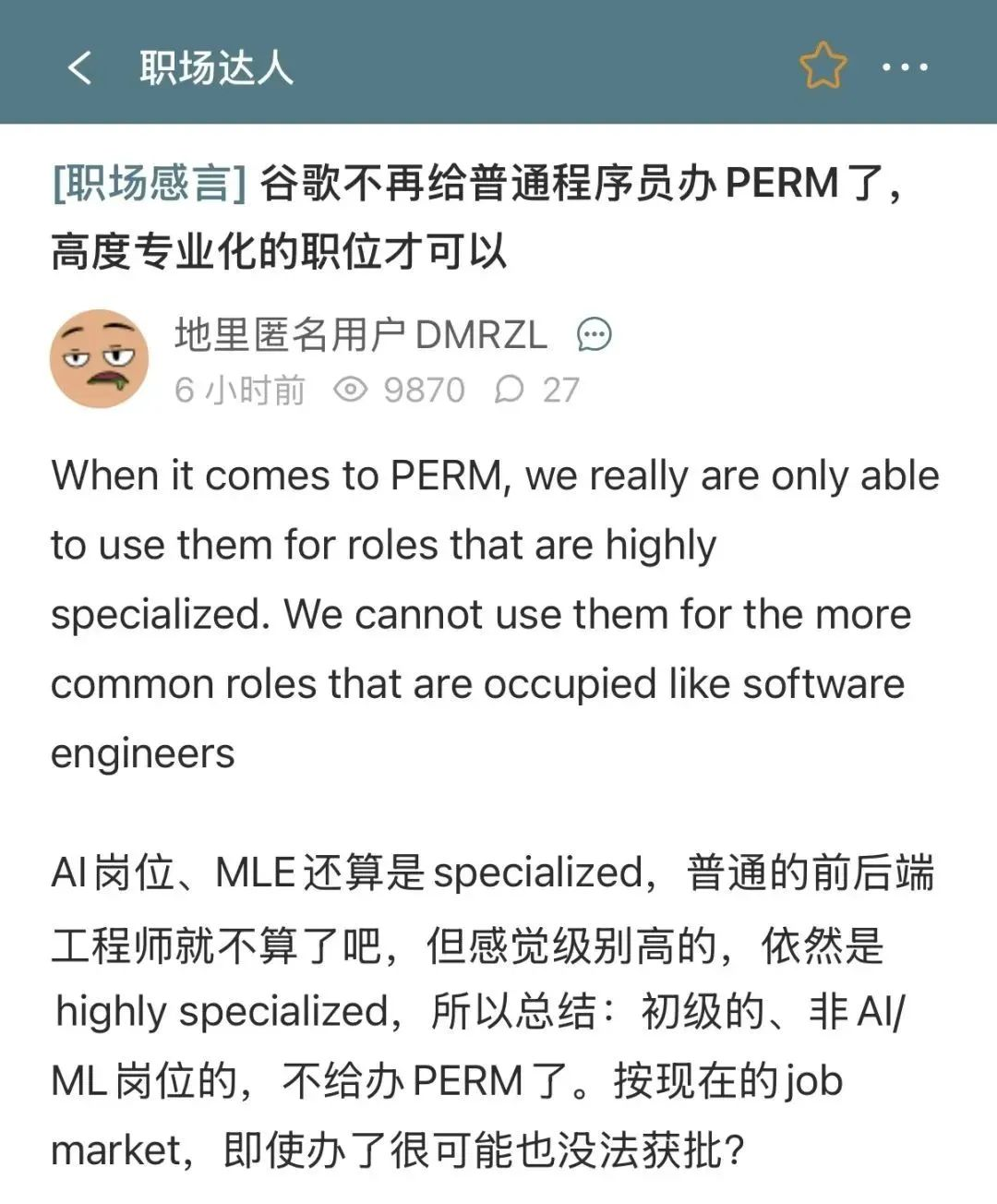
Industry analysts suggest that the key issue is not whether Google is willing to process PERMs for employees, but that for general SDE (Software Development Engineer) positions, PERM applications are essentially impossible to pass. Only highly specialized positions have a chance of being offered PERM sponsorship by the company!
Looking at Google's adjustments, there are deep-seated reasons behind them. Since the resumption of PERM applications in early 2023, the Green Card approval process has tightened significantly, primarily due to the U.S. government's rigorous scrutiny of foreign labor policies. According to U.S. Department of Labor regulations, when companies apply for PERM for foreign employees, they must prove that 'there are no qualified U.S. workers available for the position.' Because of intense competition and an abundant local supply, it is extremely difficult for ordinary software engineer positions to pass approval. At the same time, to attract top technical talent, Google has written to the Department of Labor proposing the inclusion of emerging fields like AI and cybersecurity in the 'Schedule A Shortage Occupation List.' PERM applications for such positions can bypass the cumbersome recruitment advertising process and proceed directly to labor certification approval. This policy shift indicates that the Green Card channel for ordinary coding jobs has narrowed significantly, reflecting the U.S. strategy of attracting top-tier technical talent while restricting the influx of general labor.
What is a PERM labor certification application?
As is well known, the H-1B is a critical step for Chinese international students who wish to work in the U.S. after graduation, while the PERM labor certification is the core link in applying for a Green Card. PERM is the first step for international students to apply for a U.S. employment-based immigrant visa (EB-2/EB-3). It must be initiated by the employer. Only after approval can the I-140 immigrant petition be submitted, followed by the I-485 adjustment of status application, to finally obtain a Green Card.
Generally speaking, an H-1B visa can only be held for a maximum of six years. If a Green Card is not obtained or another legal status is not found before it expires, international students are forced to leave the U.S. Therefore, the PERM application directly determines whether an international student can obtain U.S. permanent residency.
The anxiety over status and job hunting for international students is intensifying
In the past, major U.S. tech companies were not only the primary sponsors of H-1B visas but also major applicants for PERM. However, the situation has taken a sharp turn for the worse! This means that the path for international students to rely on major tech companies to obtain a Green Card has become much more difficult. Even more distressing is that the current job market faces challenges far beyond this; the wave of layoffs at major tech companies is intensifying! For H-1B visa holders, once laid off, they must find a new job within 60 days. If they fail to find a job or convert to another legal status, they must leave the U.S., which in turn jeopardizes the legal status of their spouses and the schooling of their children.
Breaking out of the 'dead end' of staying in the U.S.: A Plan B is urgent
At present, the situation for staying in the U.S. is undergoing profound changes, with an increasingly fierce competitive environment and an uncertain future. In such circumstances, rather than worrying and feeling uneasy every day, it is better to take precautions, plan a 'Plan B' early, and proactively lay out your U.S. status. Undoubtedly, for Chinese people in the U.S., without a Green Card, it is difficult to have a true sense of security.
Currently, the H-1B visa faces numerous uncertainties, with low selection rates and frequent policy changes, making it difficult for many who hold the dream of staying in the U.S. It is precisely for this reason that more and more investors are turning their attention to EB-5 immigration, viewing it as the preferred solution for U.S. status planning.
EB-5 Rural Visa: The Golden Channel for Quickly Obtaining a Green Card
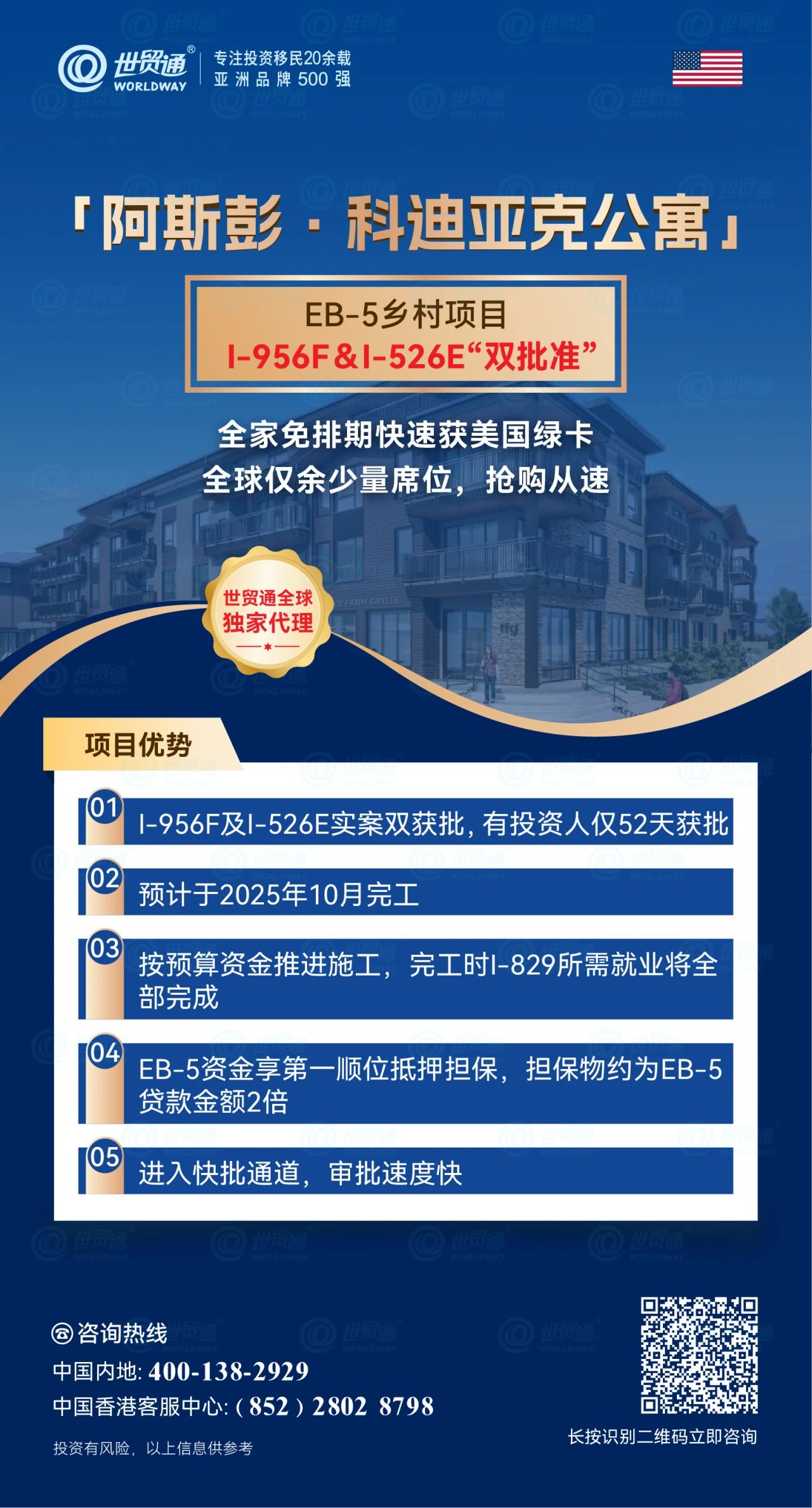
Currently, the rural project within the EB-5 reserved visa category is the preferred choice among the best options for quickly obtaining a U.S. Green Card. The EB-5 rural project combines the advantages of no visa backlog, sufficient quotas, priority processing, and concurrent filing. Investors who invest $800,000 can simultaneously submit their I-526E and I-485 applications. They can obtain a 'Combo card' in about 3 months, which allows them to enter and exit the country without affecting their status while waiting for the Green Card, and they can legally reside, study, and work in the U.S. Interested investors should submit their applications as early as possible to lock in their priority date and realize their dream of immigrating to the U.S. sooner.
I-956F Approved Projects: Accelerators for Green Card Applications
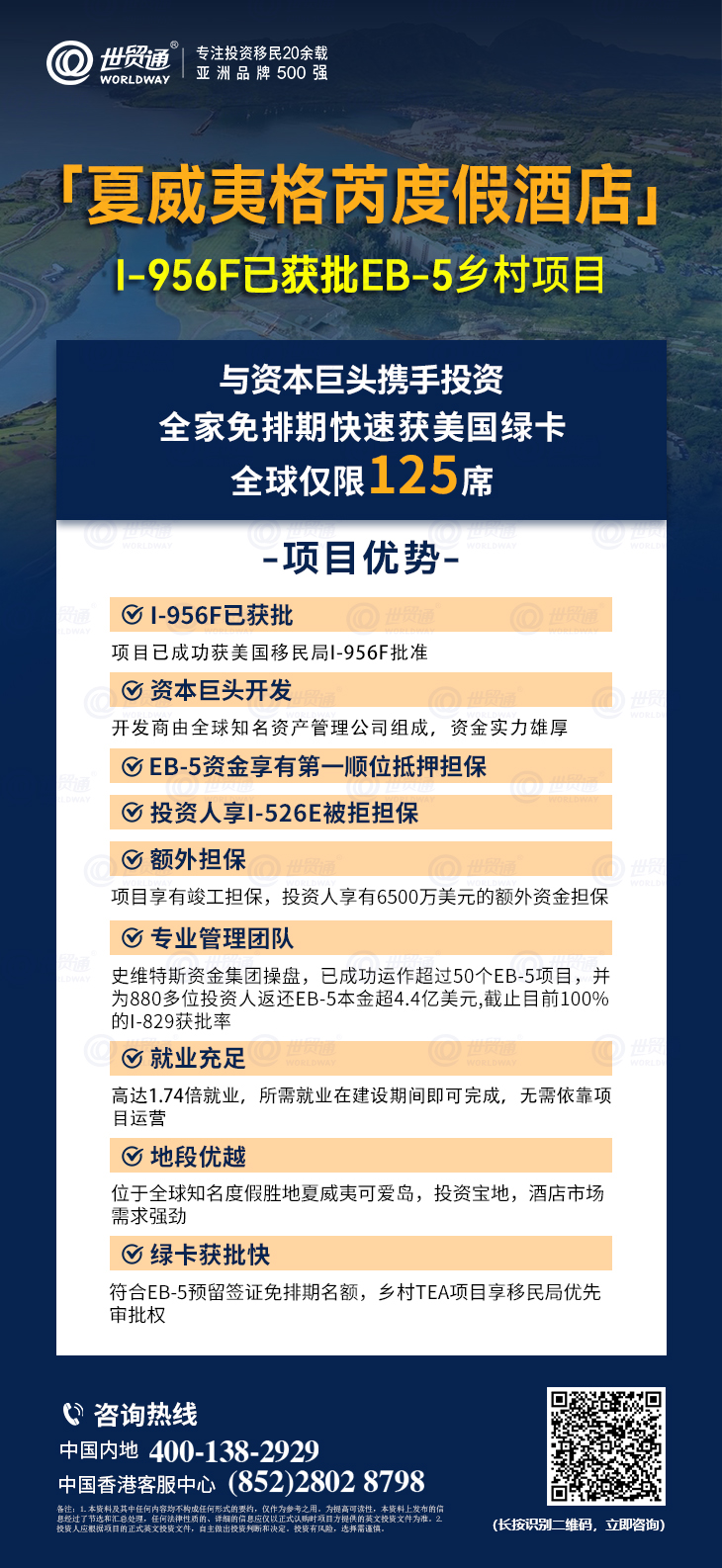
An I-956F approved project means that the project has been recognized by the U.S. Citizenship and Immigration Services (USCIS). Subsequently, when USCIS reviews the I-526E of investors in that project, it only needs to review the investor's personal documents and source of funds documents. In other words, if an investor chooses this project, the approval speed of the I-526E will be accelerated. At the same time, the approval of the project's I-956F also means that USCIS has reviewed and approved that the project is an EB-5 project that meets the TEA requirements under the new act, meaning it enjoys reserved visa quotas, allowing investors to quickly obtain a U.S. Green Card without a backlog.
Two Boutique EB-5 Projects
The Premium Choice to Seize the Opportunity to Stay in the U.S.
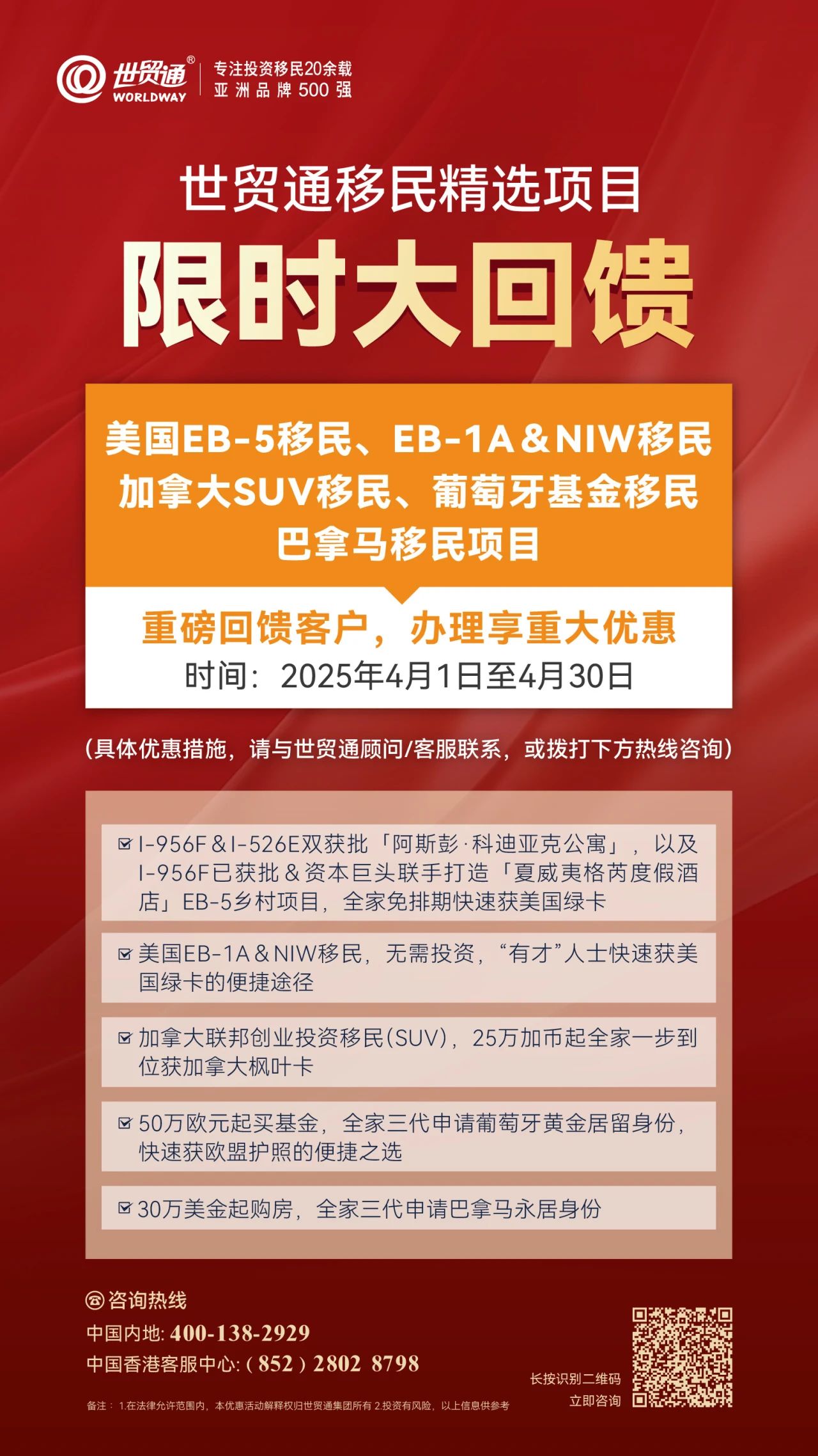
Currently, the two best-selling boutique EB-5 projects on the market—the 'Aspen Kodiak Apartments,' which has received both I-956F and I-526E project approvals, and the 'Hawaii Greystone Resort Hotel,' which was jointly created by capital giants and has received I-956F approval—are both high-quality EB-5 rural projects that have been screened and strictly vetted by the Worldway Group. They are your best choices for quickly immigrating to the U.S.
For detailed inquiries, please contact Mainland China: 400-138-2929, Hong Kong, China Customer Service Center: (852)2802 8798 *Investment involves risks; the above information is for reference only.*