





Recently, the U.S. Senate officially confirmed Kristi Noem, the Governor of South Dakota, as the Secretary of Homeland Security. This appointment has attracted widespread attention, particularly in the field of immigration policy.
Noem is known for her tough stance on immigration, emphasizing that illegal immigration poses a threat to the U.S. economy and national security. She has repeatedly mentioned that illegal immigration can bring drug violence, deadly drugs, and threats from terrorists. During her tenure as governor, she actively supported the Trump administration's immigration policies, including suspending the refugee program and banning citizens from certain countries from entering, as well as deploying the South Dakota National Guard to the southern border to assist with law enforcement.
However, there is a contradiction between Noem's hardline stance and South Dakota's reliance on immigrant labor. South Dakota is currently facing a severe labor shortage, with an unemployment rate of only 1.9%, the lowest in the nation. Many industries, such as slaughterhouses, dairy farms, and construction sites, heavily depend on immigrant labor, including illegal immigrants. Strict enforcement of immigration policies could impact these industries and further exacerbate the labor shortage. Some critics argue that the strict immigration enforcement led by Noem could have negative effects on the local economy and communities.
This contradiction is not an isolated case but rather a microcosm of the overall immigration policy challenges faced by the Trump administration. As the trend of reshoring U.S. manufacturing strengthens, the demand for skilled and unskilled labor is sharply increasing. However, the Trump administration's overall attitude towards immigration policy leans more towards restriction rather than expansion. This is reflected not only in the strict control of illegal immigration but also in the adjustments to legal immigration quotas.
In addressing the labor shortage, the Trump administration's strategy may focus more on developing the domestic labor market, such as: improving the quality of the existing workforce through vocational training programs; incentivizing more American citizens to enter the labor market by improving working conditions and wages; or promoting automation technology to reduce reliance on manual labor.
Although the Trump administration primarily restricts immigration, it may support more quotas in specific areas, such as:
• H-2B Visa: A visa for seasonal non-agricultural workers that has been widely used in industries such as agriculture and construction. The Trump administration has expanded its issuance in certain years.
• EB Visas: May prioritize in high-tech fields (such as manufacturing automation).
• Employment-Based Immigration Reform: Increase "high-value" immigration through stricter screening (such as prioritizing technical and educational backgrounds), but not inclined to open large-scale low-skilled labor quotas.
The economic pressures brought about by the reshoring of U.S. manufacturing may prompt policy adjustments. In certain specific industries or regions, immigration policies for skilled workers may be relaxed to alleviate labor shortages. However, overall, the immigration policy under the leadership of the Trump administration and Secretary Noem will still primarily follow a hardline approach, seeking a balance between economic demand and political positions.
With Kristi Noem officially taking office, the direction of U.S. immigration policy will continue to be a hot topic. Whether she can find practical solutions to resolve the conflicts between economic demands and immigration policies will not only affect the future of South Dakota but may also become a key barometer for adjustments in U.S. immigration policy. WorldWay Immigration Group will maintain continuous attention and share new information as it becomes available.
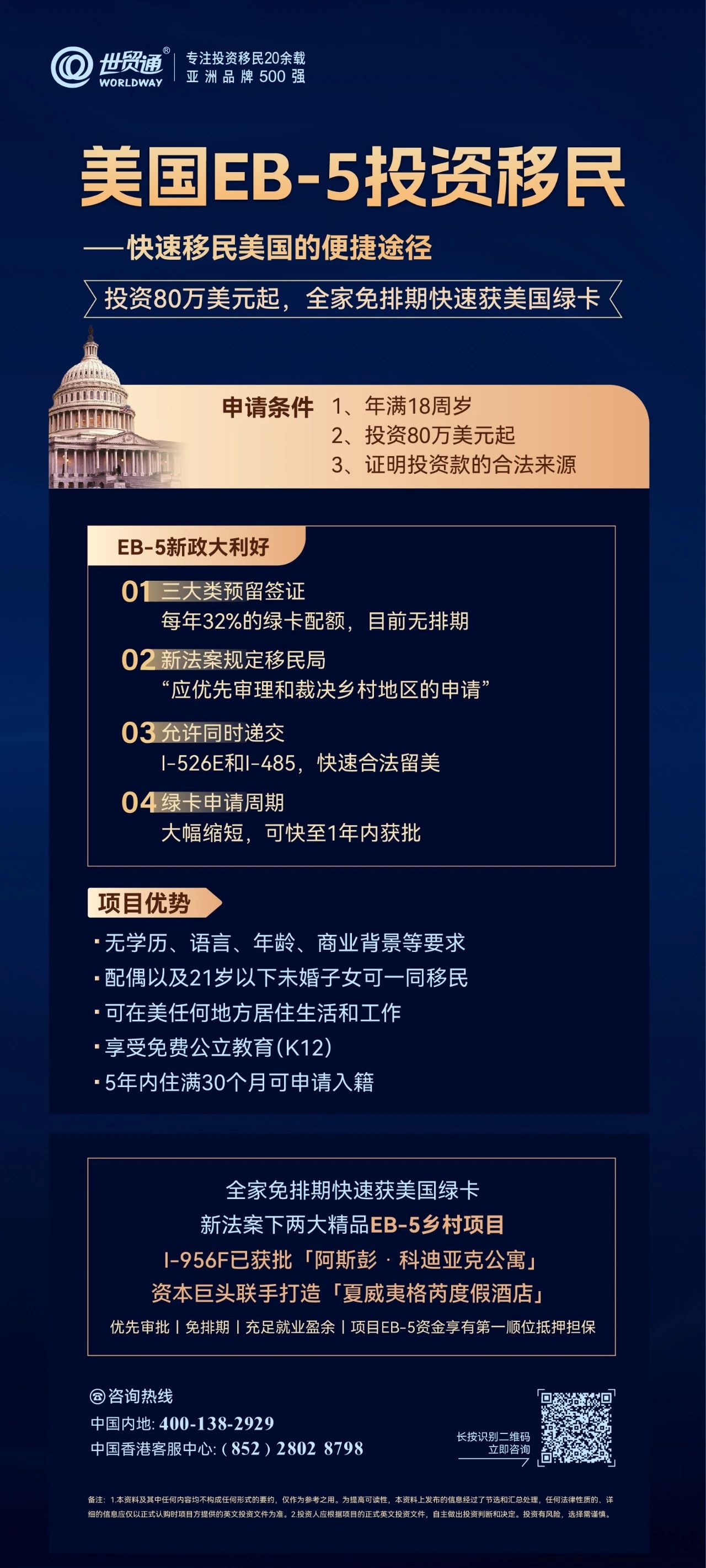
Trump has taken harsh measures against illegal immigration, but the U.S. still welcomes legal immigration, and even EB-5 investment immigration may benefit in the future. For those intending to immigrate to the U.S. through EB-5, it is crucial to seize the golden "window period" for the implementation of the new EB-5 law, submit applications as early as possible, secure priority dates, and realize the dream of immigrating to the U.S. As of now, there are ample quotas in the rural projects within the EB-5 reserved visa channel, making it an optimal choice for quickly obtaining a U.S. green card. The time to seize the opportunity for expedited green card acquisition is now.
According to the new EB-5 policy, applicants can conduct "dual submission" in the U.S., meaning that applicants without a waiting period can simultaneously submit the I-526E immigration application and the I-485 adjustment of status application, and can also apply for travel permission I-131 and work permission I-765, which is the "small green card" (Combo card), allowing them to legally reside and live in the U.S. and enjoy the benefits of a quasi-"green card" in advance. Applicants intending to immigrate to the U.S. should hurry and apply early to benefit sooner!
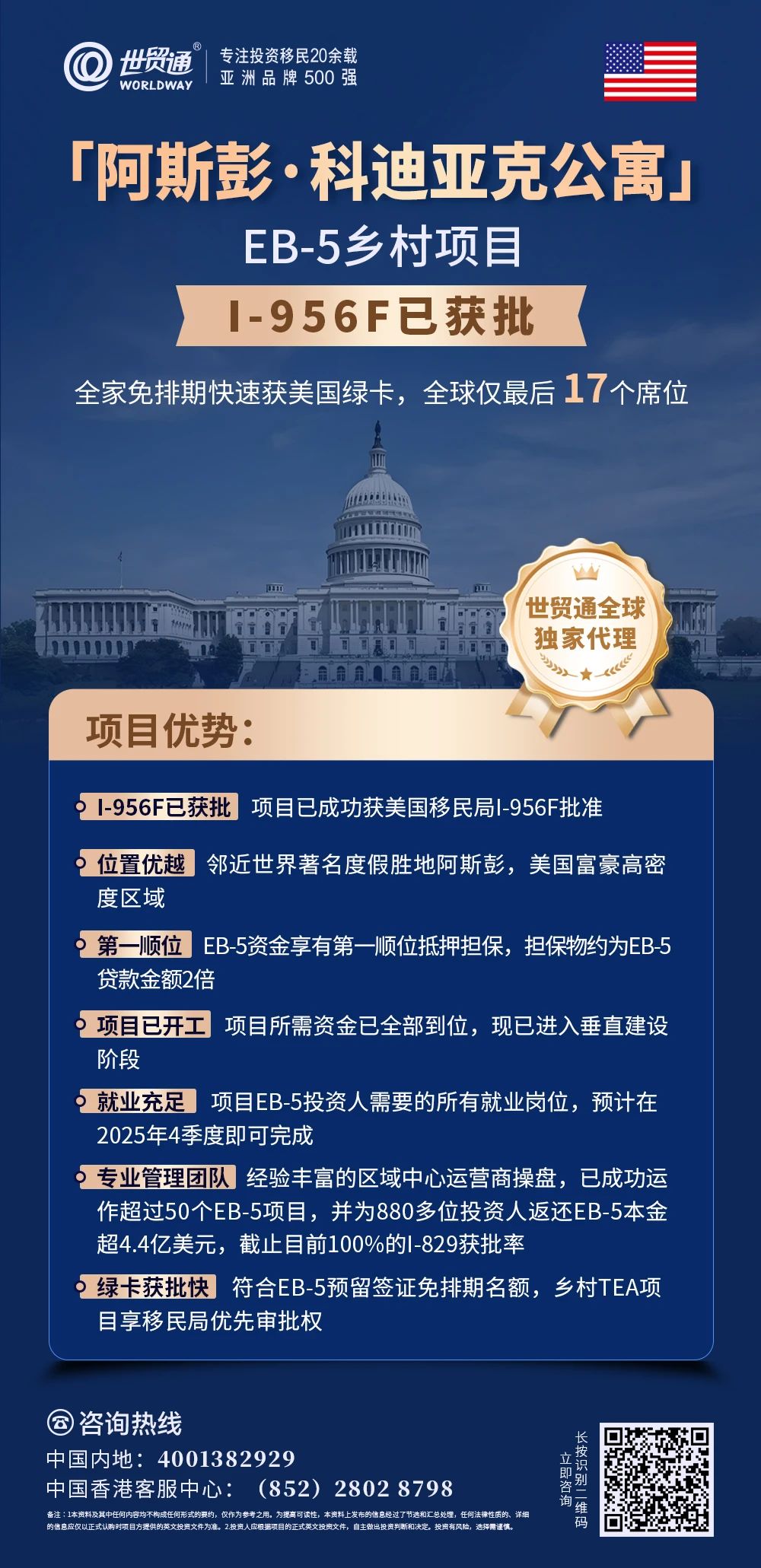
Immigration has two key elements—timing and choice! Currently, the two popular EB-5 projects on the market, the "Aspen Kodiak Apartments" approved under I-956F and the "Hawaii Grand Resort" created by capital giants, are both high-quality EB-5 rural projects that have been rigorously selected and vetted by WorldWay Immigration Group, making them excellent choices for your quick immigration to the U.S. Both of these premium EB-5 projects comply with the new rural TEA project regulations, not only enjoying reserved EB-5 visa quotas but also receiving priority processing from the immigration bureau, combining advantages such as no waiting period, priority approval, and first-position collateral for EB-5 funds, allowing the whole family to quickly obtain a U.S. green card without waiting. Quotas are limited, so act fast.
For inquiries in mainland China: 400-138-2929, Hong Kong customer service center: (852)2802 8798
* Investment involves risks; the above information is for reference only.*