-
Compared to 2023, the number of new investors increased by 40%, contributing over $3 billion to the U.S. economy.
-
The total number of I-829 approvals reached a record high.
-
In 2024, the number of EB-5 visas issued by U.S. consulates was the highest in the program's history.
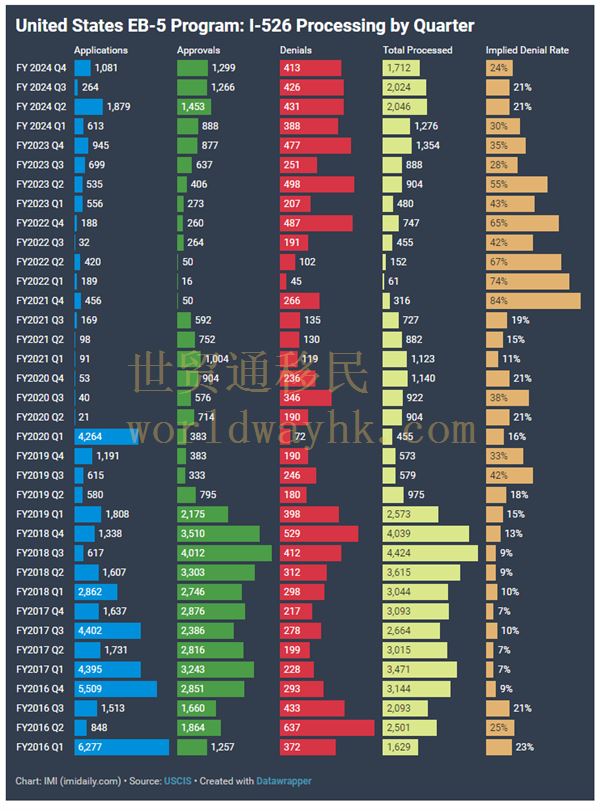
In the fourth quarter of the 2024 fiscal year, the number of investors filing I-526 applications increased by 350% compared to the third quarter. The data for the third quarter was relatively low, primarily because many investors rushed to submit their applications before the government fee adjustment on April 1, 2024.
This quarter, USCIS disclosed processing data for I-526E applications for the first time, which had not been disclosed in previous quarters.
The average denial rate for I-526 and I-526E applications is 21%, but since the legislative changes in 2022, the denial rate for applications submitted through the Regional Center program has been only 3%. In contrast, the denial rate for direct EB-5 applications, where investors invest in their own businesses, is as high as 50%.
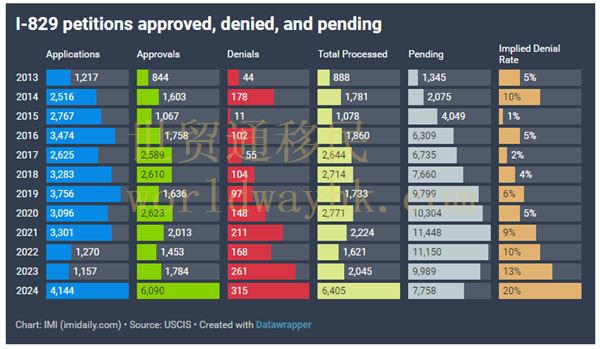
I-829 Application Approvals, Denials, and Backlog Status
Let's look at another key data point in the EB-5 application process—I-829.
The fourth quarter of the 2024 fiscal year showed a strong positive trend for I-829. In the fourth quarter, the number of approved families remained at a high level, with USCIS approving 1,532 applications. This brought the total number of approvals for this fiscal year to 6,089, a record high and more than double the number of approvals in 2023.
The denial rate for I-829 applications in the fourth quarter was slightly above 4%.
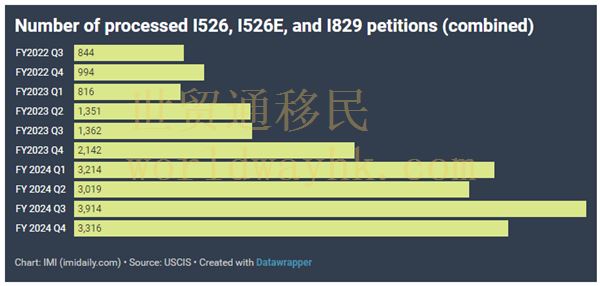
I-526, I-526E, and I-829 Application Processing Volume (Combined)
The efficiency of the USCIS Immigrant Investor Program Office (IPO) continues to improve. In the fourth quarter, the IPO processed over 3,000 investor applications. In the 2024 fiscal year, the IPO reviewed over 13,000 applications, an increase of 150% compared to the 2023 fiscal year. If USCIS maintains this level of performance, processing times for investor applications are expected to shorten significantly in 2025.
Although USCIS did not release specific data on Regional Center applications for the fourth quarter, it is known that 32 new EB-5 Regional Center projects submitted applications. During the same period, the government approved 94 projects and rejected 25, with a rejection rate of nearly 25%. Because Regional Centers typically begin accepting investors before a project is approved, this means the 25 rejected projects may involve hundreds of investors whose I-526E forms may also face rejection.
In 2024, the number of EB-5 visas issued reached a record high. Due to adjustments in the annual quota following COVID-19, the EB-5 visa cap for the 2024 fiscal year was as high as 14,169. As of the end of September 2024, 12,055 EB-5 visas had been issued. These visas primarily benefited investors who submitted applications under the old law and received I-526 approval.
The United States has always been one of the most popular immigration destinations in the world. This series of data fully demonstrates that with the orderly issuance of reserved EB-5 visas under the new U.S. investment immigration policy, EB-5 projects without visa backlogs have become a highly sought-after choice in the market. Of course, as the number of applications gradually increases, the golden window for applying for EB-5 under the new law without backlogs will become shorter. It is recommended that investors interested in immigrating to the U.S. seize the critical window, choose rural category projects with more abundant visa supply, and submit their I-526E applications as early as possible to lock in their priority date. It cannot be ruled out that with the surge in applications for rural projects later on, there may be a future backlog; submitting early provides the opportunity to obtain a green card sooner.