





Recently, the Massachusetts Institute of Technology (MIT) announced that starting in the fall of 2025, students from families with an annual income below $200,000 can attend the school tuition-free.
Moreover, for students from families with an annual income below $100,000, MIT will not only waive tuition but also cover all expenses, including room and board, fees, books, and personal expenses. This policy aims to make world-class higher education more affordable for more students.

MIT stated that 80% of American families meet the income threshold of below $200,000, while 50% of families have an income below $100,000. This year, MIT has allocated $167.3 million for need-based financial aid for undergraduates, an increase of about 70% compared to ten years ago.
"College costs are a real concern for all families," said MIT President Sally Kornbluth. "We are determined to provide the most talented students with this transformative educational experience, regardless of their financial situation. Therefore, to every student who dreams of attending MIT, do not let worries about costs hold you back."
MIT's policy sets a benchmark for other universities. In the context of rising costs of higher education in the United States, this initiative may prompt more universities to reassess their financial aid policies, providing a model for exploring equity in global higher education. The announcement of this policy also highlights MIT's leadership in enhancing educational accessibility and improving students' economic prospects, while also giving more families around the world hope for achieving both "top-tier education" and "affordability."
In recent years, many elite universities in the United States have introduced similar tuition waiver or reduction programs. For example, Columbia University announced that students from families with an annual income below $150,000 will have their tuition waived; students from families with an income below $66,000 will have all school-related expenses waived, including tuition, fees, and additional support of $2,000 for relocation for freshmen. Dartmouth College and Brown University have set their tuition waiver threshold at families with an annual income not exceeding $125,000. Yale University and the University of Pennsylvania have set their tuition and room and board waiver thresholds at families with an income below $75,000. These universities not only focus on academic research but also care about the overall development of students, providing financial aid to give more outstanding students the opportunity to receive high-quality education.
In the minds of many, American universities are renowned for their high-quality education and world-leading rankings. However, their high tuition fees deter many families. Nowadays, a number of prestigious universities in the U.S. offer tuition-free educational opportunities, reflecting their commitment to educational equity and providing limitless possibilities for young people around the world with dreams. Regardless of economic background, as long as there is talent and determination, these universities will open their doors for you!
For families whose children are already studying in the U.S. or those planning to study in the U.S., having a U.S. green card offers more advantages. With a U.S. green card, one can freely choose to attend public schools in the U.S., enjoy quality educational resources, and benefit from priority admission rates at U.S. universities, paving the way for future academic pursuits. Additionally, there are many tangible advantages and conveniences in work and life.
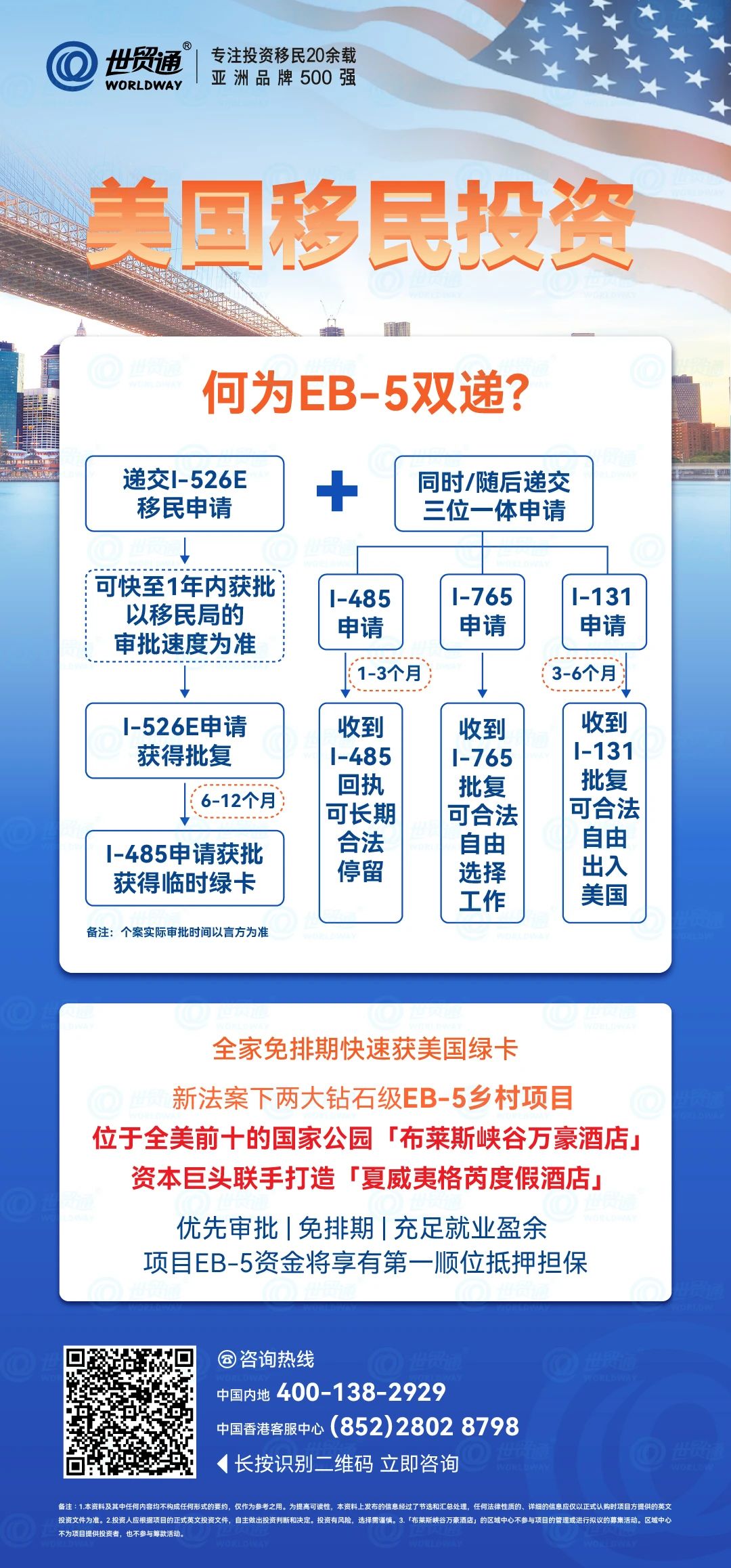
If parents also want to plan for their children's study abroad advantages, they should consider suitable immigration programs early and not let their children miss out on the "green card" pathway. Currently, it is a good time to immigrate to the U.S. through the EB-5 program. Under the new policy, there is currently no backlog for applicants born in mainland China, and submitting applications early can secure priority dates and realize the dream of immigrating to the U.S. sooner.
For investors, if applying for an immigration category without a backlog and the applicant is in the U.S. and meets the relevant conditions, they can submit the I-485 application for status adjustment along with the immigration application, as well as the I-131 and I-765 applications, thus enabling faster living and working in the U.S.
For inquiries in mainland China: 400-138-2929, Hong Kong Customer Service Center: (852)2802 8798
Some materials in this article are sourced from the internet, and the copyright belongs to the original authors. If there are any copyright issues, please contact the original authors and us for removal. *Investment involves risks; the above information is for reference only.*