





In today's global trend of educational integration, studying abroad is widely regarded as an important stepping stone in a child's growth journey, and countless parents aspire to broaden their children's international horizons through such experiences. As one of the world's most attractive immigration destinations, the United States has become the top choice for many Chinese families paving the way for their children's education. However, it cannot be ignored that beneath the halo of studying in the U.S., those students who lack legal status often silently endure unknown challenges.
Recently, the U.S. Immigration and Customs Enforcement (ICE) released the "2023 Student and Exchange Visitor Program (SEVP) Data Report." The statistics include students who entered the U.S. on F-1 visas to pursue full-time academic courses, and students who entered on M-1 visas to pursue full-time vocational courses. This report provides an intuitive overview of the current state of studying in the U.S. and is significant for student families and for assessing future trends.
Data shows that in 2023, the number of international students in the U.S. holding F-1 and M-1 visas was 1,503,649, an increase of 10.4% from the previous year. Among students holding F-1 visas, 457,906 were pursuing bachelor's degrees, an increase of 1.7%; and 608,857 were pursuing master's degrees, a year-on-year increase of 1.5%.
For a long time, China has been one of the important sources of international students for the U.S., with the number of Chinese students in the U.S. exceeding 330,000 in 2023.
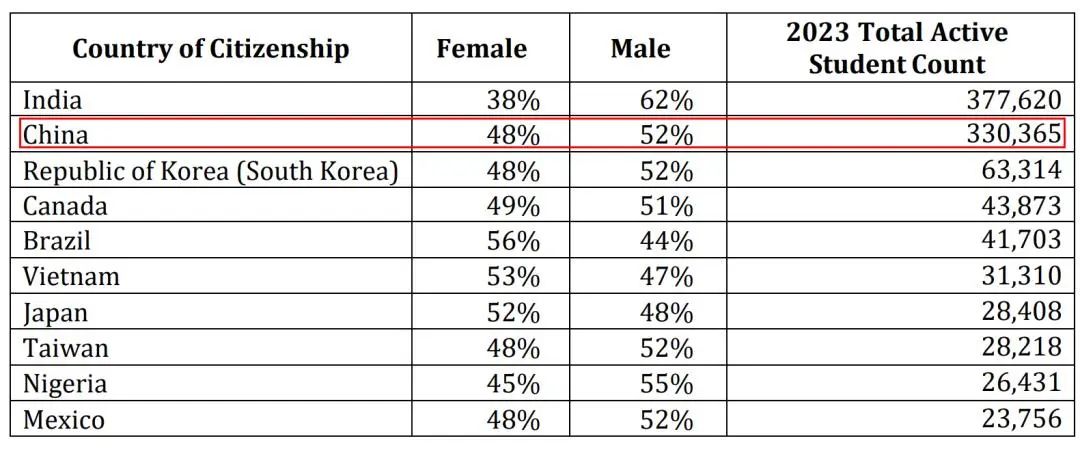
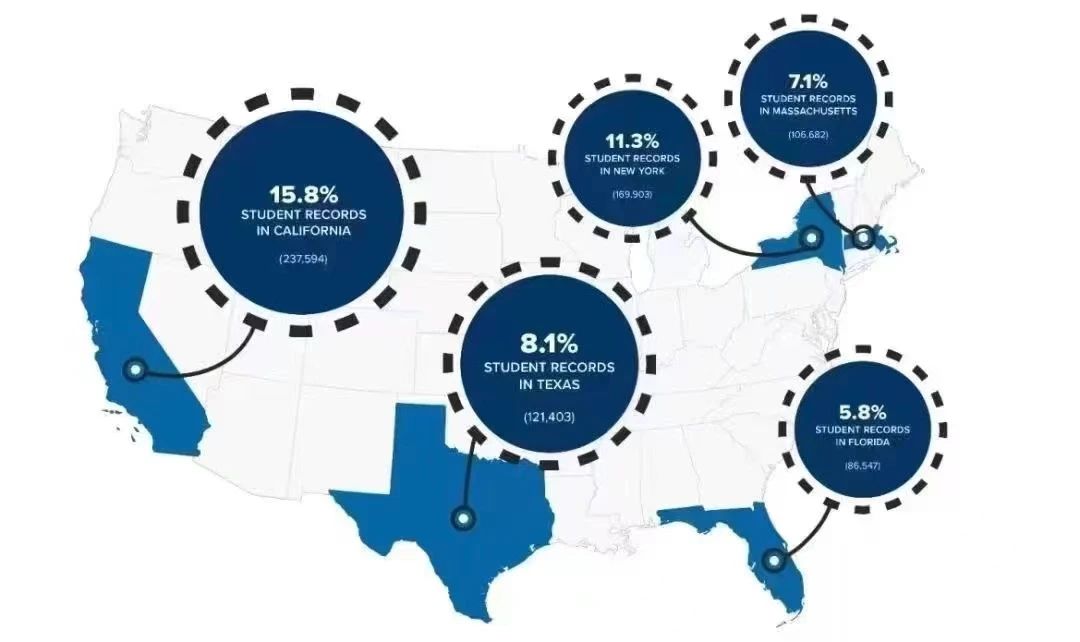
Looking at data from various U.S. states, California (237,594), New York (169,903), Massachusetts (106,682), Texas (121,403), and Florida (86,547) received the most international students, totaling 722,129, accounting for 48% of the total number of international students in the U.S.
Twenty U.S. universities, including New York University, Northeastern University, Columbia University, and the University of Southern California, accepted 20% of F-1 visa students, enrolling a total of nearly 300,000 international students. Popular majors for international students are mainly in STEM fields: Computer Science, Computer and Information Sciences, Electronics and Electrical Engineering, Mechanical Engineering, and Information Technology. In addition, there are Biology, Civil Engineering, Computer Engineering, Chemistry, and Mathematics, with Business ranking third in popularity.
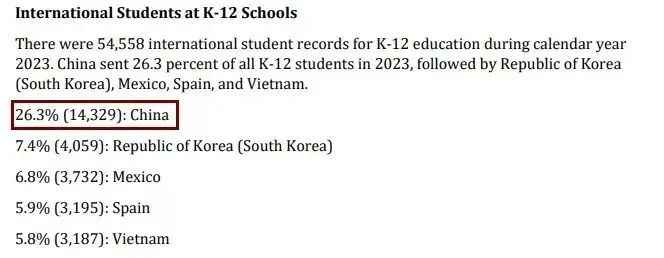
Furthermore, the report shows that at the K-12 education stage, the number of students from China ranks first, accounting for 26.3% of the young student group, followed by South Korea. This also proves that more and more families in our country are beginning to choose to send their children abroad at a younger age.
The "2023 Open Doors Report" also shows that in the 2022-2023 academic year after the pandemic, the growth rate of young students going to the U.S. soared by 29%. Judging from the growth trend, more families will advance the age of sending their children to study in the U.S. in the future. Moreover, for international students, not having a Green Card is a major issue for staying in the U.S. after graduation. They must overcome the "three mountains": the OPT stage, the H-1B stage, and the EB-2/EB-3 to Green Card transition stage. Studying in the U.S. is easy, but staying in the U.S. is not.
Educational planning starts with status. In fact, no matter when you plan to send your child to the U.S. for education, you need to plan in advance. Let your child study in the U.S. with a Green Card. As a "local student," the admission rate for U.S. high schools increases, and it is easier to integrate with local classmates; parents can accompany them with peace of mind; when children apply for prestigious universities in the future, they do not need to compete with international students for the limited 5%-10% of university spots, resulting in a higher admission probability and no restrictions on popular majors; and they have far more advantages in internships and employment than children without U.S. status!
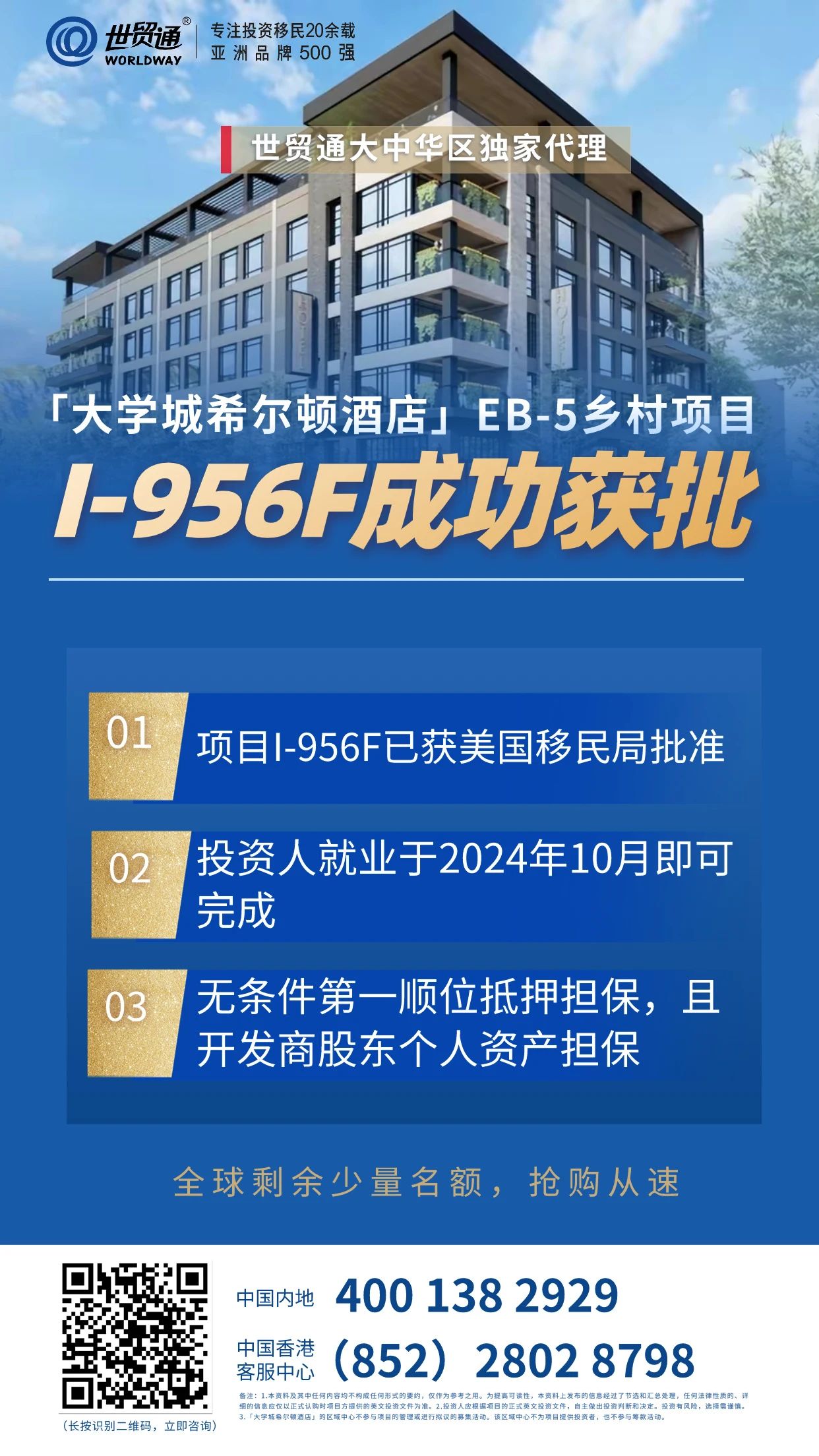
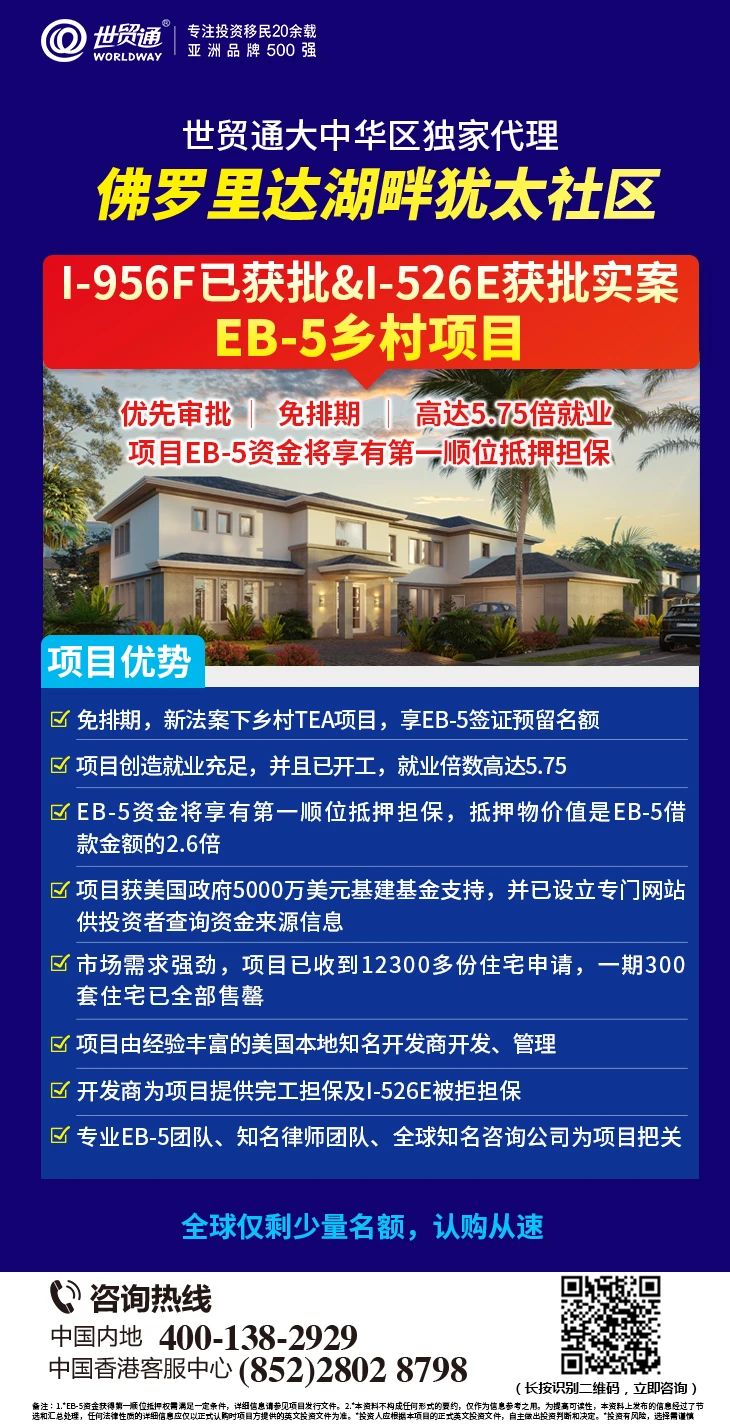
Currently, the U.S. EB-5 investment immigration is an effective way to quickly obtain a U.S. Green Card and pave the way for children's development in the U.S. After the implementation of the new U.S. EB-5 investment immigration policy, applicants can perform "concurrent filing" in the U.S. That is, applicants without a visa backlog can simultaneously submit the I-526E immigration petition and the I-485 adjustment of status application. They can also apply for travel authorization (I-131) and work authorization (I-765) to legally reside, study, and work in the U.S., enjoying quasi-Green Card freedom in advance.
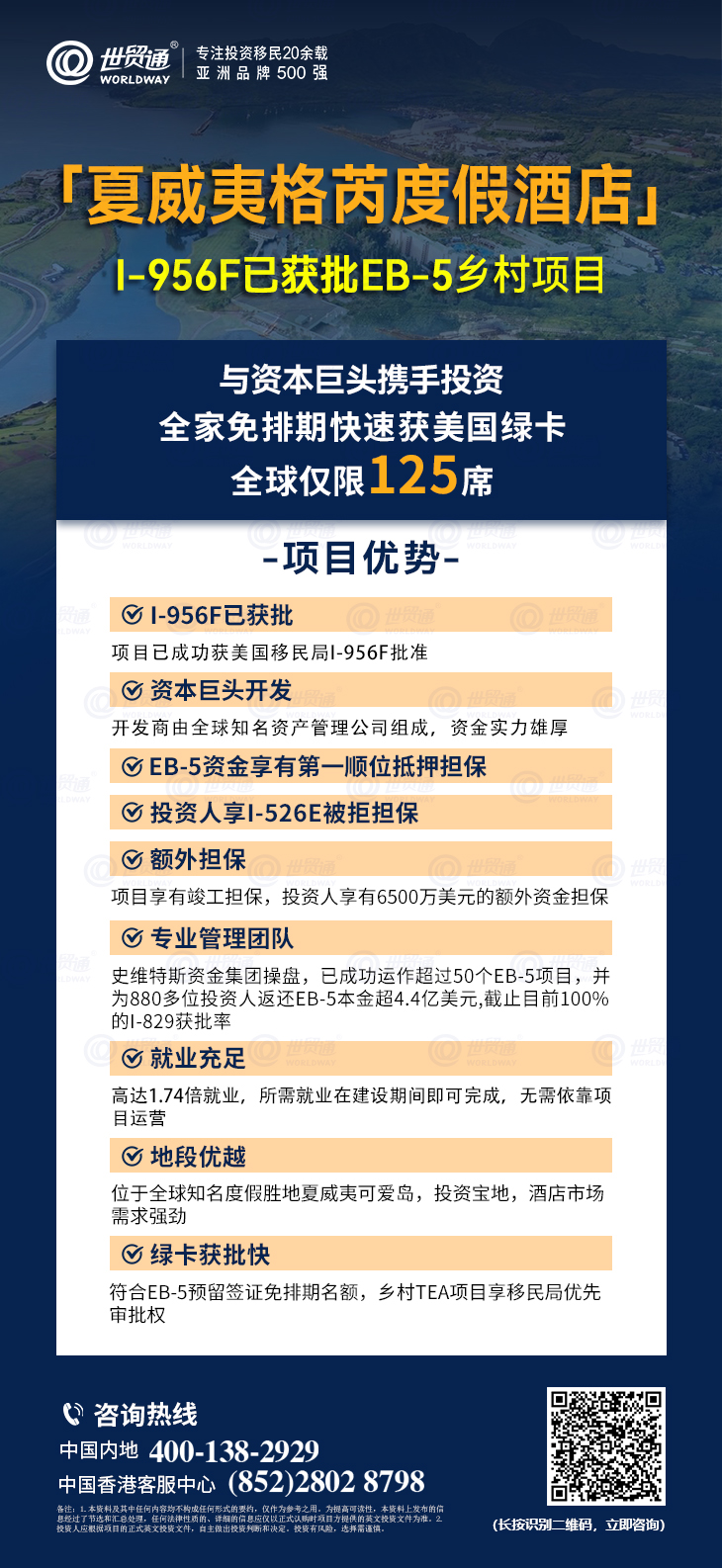
There are two key elements to immigration—timing and choice. The window for EB-5 "concurrent filing" without a backlog is fleeting, so seize the opportunity to catch the last train! For investors with a rigid demand for immigrating to the U.S., the rural project within the EB-5 reserved visa category is the preferred choice among the best options for quickly obtaining a U.S. Green Card.
For detailed inquiries in Mainland China: 400-138-2929, Hong Kong, China Customer Service Center: (852) 2802 8798
Some materials in this article are from the internet, and the copyright belongs to the original author. If there are any copyright issues, please contact the original author and us for removal. *Investment involves risks; the above information is for reference only.*