





It is well known that the quality of education at U.S. universities is world-leading, making them highly popular among families planning for study abroad. Recently, as U.S. universities have released their admission results one after another, the application season for the 2023 fall semester has gradually come to an end. Many students have likely received their ideal university acceptance letters, successfully navigating the highly competitive application process. However, this has been followed by announcements from several U.S. universities regarding tuition hikes, which has left many families feeling both aspirational and under significant pressure.
It is reported that tuition fees for the 2023-24 academic year have increased at many U.S. universities, for example: Princeton University tuition has risen to $59,710; Massachusetts Institute of Technology tuition has risen to $60,156; Harvard University tuition has risen to $54,269; Stanford University undergraduate tuition has risen to $61,731; and Yale University tuition has risen to $64,700, among others.
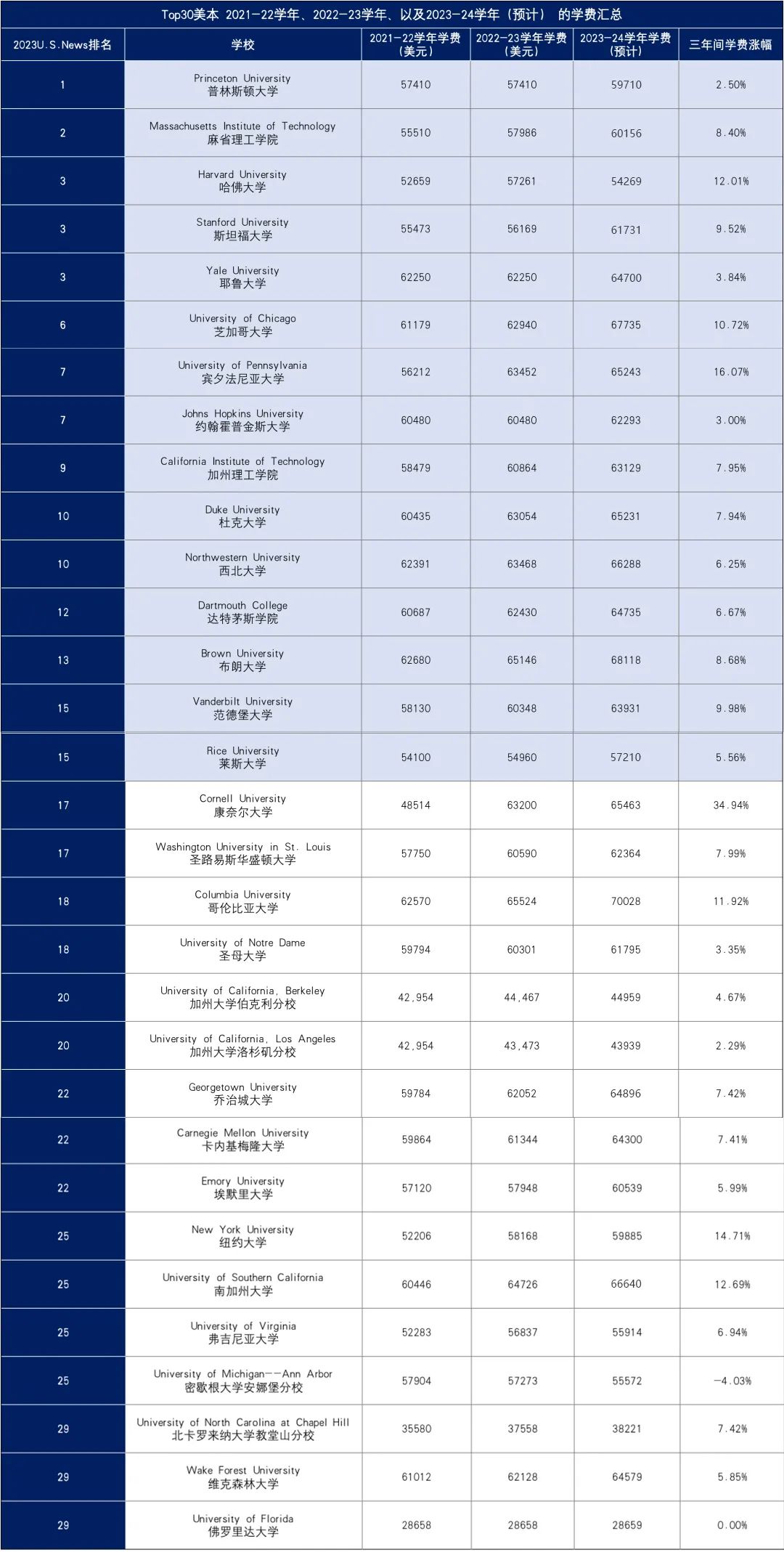
Faced with constantly rising tuition and soaring living expenses, utilizing Financial Aid (hereinafter referred to as FA) to alleviate the financial burden has become a common choice for both domestic and international students in the U.S. However, many FA programs are only applicable to U.S. citizens and U.S. Green Card holders. For instance, the Free Application for Federal Student Aid (FAFSA) provided by the U.S. federal government helps approximately 22 million students from over 6,000 colleges and universities receive aid each year, yet international students are excluded.
Tuition fees keep rising, and the cost of studying abroad is becoming increasingly high. Furthermore, on the path of studying abroad, one will face many "invisible dilemmas." In stark contrast to the study-abroad craze, many Chinese students find themselves unable to find jobs or remain in the U.S. after graduation.
The fundamental reason why international students struggle to find work in the U.S. is the limitation of their status. According to U.S. law, non-U.S. citizens or Green Card holders require employer sponsorship to obtain an H-1B work visa to work in the U.S. However, the competition for the H-1B lottery in the U.S. is becoming increasingly fierce. It is projected that the number of H-1B applicants for the 2024 fiscal year may exceed 500,000, yet there are only 85,000 spots available annually, resulting in a success rate of approximately 17%. At the same time, even if selected, there is significant uncertainty; once laid off by a company, H-1B visa holders may be forced to leave the U.S. at any time. Therefore, the hope of remaining in the U.S. via an H-1B visa is likely to fall through in the end.
Without legal status, your life can be rewritten at any time! Studying in the U.S. does not equate to staying in the U.S.! So, how can you take precautions and prepare yourself thoroughly? In fact, the Green Card is the issue that urgently needs to be resolved. What would be the result if you made immigration plans before studying abroad, or while your child is studying abroad, and obtained a Green Card while pursuing your education?
A U.S. Green Card makes life different. By obtaining a U.S. Green Card, international students are no longer restricted by status or work visas after graduation. They can enjoy priority access to internships and job opportunities at Fortune 500 companies, government agencies, and non-profit organizations, choose their careers freely, and receive the same salary and benefits as locals. Moreover, with a U.S. Green Card, students share in 90%-95% of the admission quotas available to domestic students. In terms of costs, Green Card holders can enjoy the same tuition rates as domestic students, which is only one-third of that for international students. In short, Green Card status plays a pivotal role in every aspect of a child's school selection, internship, and job search.
For investors with clear needs for immigrating to the U.S. and planning for their children's education, the U.S. EB-5 investment immigration program is an effective and relatively fast way to obtain a U.S. Green Card. The application requirements are flexible, with no restrictions on age, education, language, business background, or work experience. With an investment starting at $800,000, the whole family can immigrate to the U.S., live and work anywhere in the country, and children can enjoy free public education (K-12). Spouses and unmarried children under 21 can immigrate together.
Currently, investors can choose non-visa-backlog EB-5 projects to immigrate to the U.S. quickly. For example, the popular "Florida Lakeside Jewish Community" project on the market is an EB-5 project that meets the requirements for rural areas (TEA) under the new act. It not only enjoys reserved EB-5 visa quotas but also receives priority processing from the immigration authorities. It combines many advantages, such as no visa backlog, a project employment multiplier as high as 5.44, and first-priority mortgage security for EB-5 funds! Good projects do not wait; interested parties should act quickly and complete their immigration applications as soon as possible!

There are two key elements to immigration—timing and choice! The Florida Lakeside Jewish Community EB-5 project is currently in high demand. Project quotas are limited, so subscribe quickly. Interested investors should seize the opportunity. For more details, please send us a private message in the comments section or call the WorldWay service hotline: Mainland China: 400-138-2929, Hong Kong, China: (852) 2802 8798.
Some materials in this article are sourced from the internet, and the copyright belongs to the original author. If there are any copyright issues, please contact us for removal.
*This material does not constitute an offer of any kind and is for informational purposes only. To improve readability, the information published in this material has been truncated and summarized. Any detailed information of a legal nature should be based solely on the English investment documents provided by the project party at the time of formal subscription. *Investors should make their own investment judgments and decisions based on the formal English investment documents of this project. *Investment involves risks, and choices should be made with caution.*