





What is the country of North Macedonia (formerly Macedonia) like? Why did Macedonia change its name to North Macedonia? The editors at WorldWay are here to answer these questions for you one by one.
I. Name of the country of North Macedonia
Full name of North Macedonia: Republic of North Macedonia.
English name: The Republic of North Macedonia, Republika Severna Makedonija
II. Introduction to North Macedonia
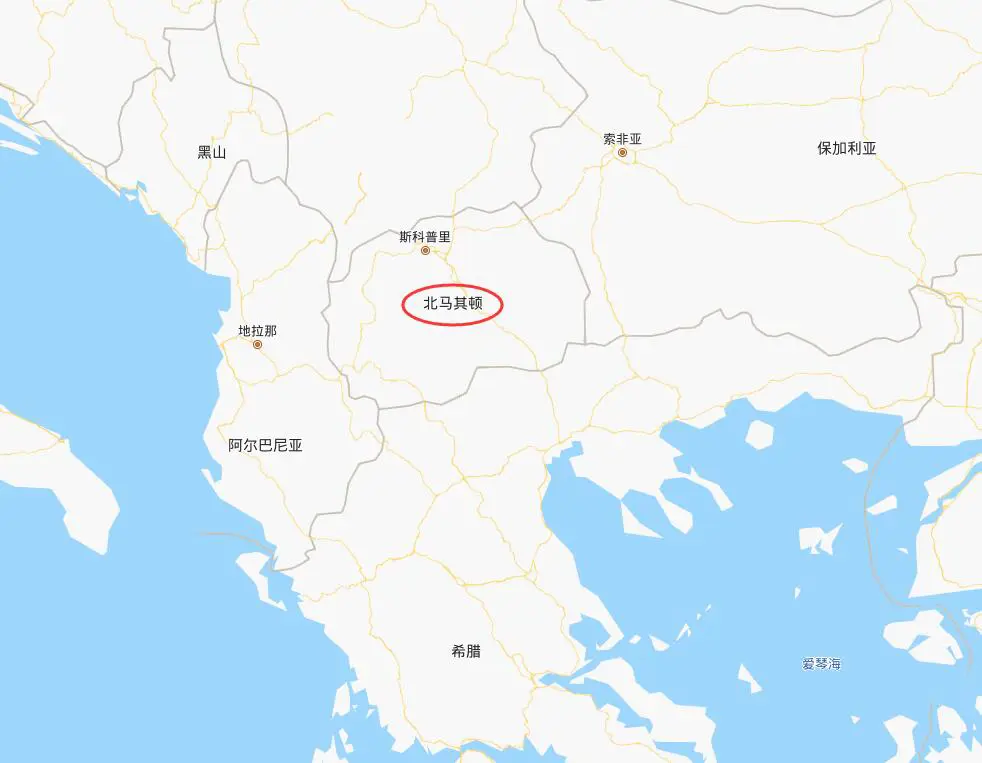
The country of North Macedonia is located in the central part of the Balkan Peninsula in Europe. It is bordered by Albania to the west, Greece to the south, Bulgaria to the east, and Serbia to the north. The climate is primarily temperate continental. North Macedonia has an area of approximately 25,713 square kilometers and a population of approximately 2.077 million (2019). The main ethnic groups in North Macedonia are Macedonians (64.18%), Albanians (25.17%), Turks (3.85%), Roma (2.66%), and Serbs (1.78%). The official language of North Macedonia is Macedonian. Most residents of North Macedonia practice Eastern Orthodoxy, with a minority practicing Islam. An important holiday in North Macedonia is Independence Day, which falls on September 8.
III. Capital of North Macedonia
The capital of North Macedonia is Skopje, with a population of approximately 630,000 (2019). The capital, Skopje, has beautiful scenery and a temperate continental climate. The temperature difference is small, with the annual temperature remaining around 14°C, a maximum temperature of 31.5°C, and a minimum temperature of –3.8°C.
III. Head of State of North Macedonia
The President of North Macedonia is Stevo Pendarovski, who was elected in May 2019 for a 5-year term, which will end in 2024.
IV. Brief History of the Origin of North Macedonia
In the 7th century, Slavs migrated to the Macedonia region. From the second half of the 10th century to the beginning of the 11th century, Samuel established the first Slavic state. Since then, the region has long been under the rule of the Byzantine and Ottoman Empires.
After the end of the First Balkan War in 1912, Serbian, Bulgarian, and Greek armies occupied the Macedonia region.
After the Second Balkan War in 1913, Serbia, Bulgaria, and Greece re-partitioned the Macedonia region. The part geographically belonging to Serbia was called Vardar Macedonia, the part belonging to Bulgaria was called Pirin Macedonia, and the part belonging to Greece was called Aegean Macedonia.
After World War I, Vardar Macedonia was incorporated into the Kingdom of Serbs, Croats and Slovenes (renamed the Kingdom of Yugoslavia in 1929) as part of Serbia.
After World War II, the Socialist Federal Republic of Yugoslavia was established (renamed the Socialist Federal Republic of Yugoslavia in 1963).
On November 20, 1991, North Macedonia declared independence and established its constitutional name as the "Republic of Macedonia."
On April 7, 1993, due to Greece's opposition to North Macedonia's use of its constitutional name, North Macedonia joined the United Nations under the provisional name "the former Yugoslav Republic of Macedonia."
On June 12, 2018, the Prime Ministers of North Macedonia and Greece announced that they had reached an agreement on the country name issue.
On February 12, 2019, the government of North Macedonia announced the official change of its country name to the "Republic of North Macedonia."