The "Montenegro" described by Byron does not refer to a specific mountain, but rather to a mountainous small country by the Adriatic Sea—Montenegro. Perhaps this is a country you have never heard of, as until 2006 it was part of a nation with Serbia, abbreviated as SCG. Before 2003, SCG was known by a more familiar name—Yugoslavia. This country is indeed very small, but the call of mountains and sea is breathtaking; it seems to be secluded from the world, yet possesses an innate romance.
Did you know that 70% of Montenegro is mountainous, and even the administrative divisions are defined by mountains? If the mountains here were flattened, they could cover the entire map of Europe.
The encirclement of the Adriatic Sea and the result of glacial movements have created a coastline of 300 kilometers, achieving the most beautiful encounter between land and sea as described by Byron.
The mountain roads are steep, houses are built against the mountains, and the towering cliffs connect with the vast blue sea, with sunlight shimmering on the surface of the water. The country lives up to its name; few countries can so vividly and aptly connect their name with their landscape, and Montenegro truly deserves its name.
Bay of Kotor
On the approximately 300-kilometer coastline of Montenegro, the southeastern Bay of Kotor is the most popular among travelers. The poet Byron, who traveled through Montenegro, once said: "Heaven, with a grand stroke, has planted a pearl of nature here." Perhaps it is time to harvest pearls once again.
This bay features the only fjord topography in the Mediterranean region and has been selected as one of the 25 most beautiful bays in the world. In the 1970s, 14,600 hectares of this area were designated as a UNESCO cultural and natural heritage site.
Bay of Kotor is also a natural harbor surrounded by mountains, with the changing shapes of the mountains and the bay providing unique scenery at every turn. The steep and rugged mountains, with granite formations in dark gray, are reflected in the azure waters at their feet, where charming fairy-tale-like towns cluster, with the highest points often being the spires of churches. Almost every small town is backed by mountains and faces the sea, each with stories of prosperity giving way to tranquility. The bay contains several mini islands, each with a church, where an elderly bell-ringer rings the bell at the same time every day, marking the tranquility of the harbor.
Old Town of Kotor
The most famous site in the Bay of Kotor is the city of Kotor, which is listed as a UNESCO World Heritage Site. The old town clings to the most jagged coastline of the Adriatic Sea, and a chain can easily seal it off. For this reason, the ancient Venetians built fortifications and walls, making the entire city resemble a large maze; without a map, it is easy to get lost.
The small town is quite compact, and it can be explored in about an hour, but travelers often find themselves easily spending an entire day getting lost in the winding alleys, always encountering one small square after another, where countless cafes and ice cream shops invite them to linger.
Every stone in the old town bears the marks of time; after hundreds of years, everything seems indifferent, only deepening the patterns on the stones.
The Cathedral of Saint Tryphon, built in 1166, is the tallest landmark in Kotor and is also the oldest and most famous church along the Adriatic coast. Every half hour, the church bells ring, echoing throughout every corner of the city.
A must-do in Kotor is to climb the zigzag fortress walls on the cliffs of Mount Lovćen, where you can overlook the entire old town and the panoramic view of the fjord. The city walls, which began construction in the 9th century and were completed in the 18th century, stretch 4.5 kilometers long and, when viewed from the foot of the mountain, resemble the Great Wall of China, seemingly disappearing into the gray-black mountain scenery if not looked at closely.
Porto Montenegro
Walking along the waterfront promenade outside the city walls, one can marvel at the countless luxurious private yachts docked in the harbor. Unlike the simplicity of Kotor, Porto Montenegro in the Bay of Kotor showcases the luxurious side of Montenegro. Once a military port during the Austro-Hungarian Empire, Porto Montenegro was developed a few years ago by three of the world's wealthiest individuals—gold mining mogul Peter Munk, LVMH chairman Bernard Arnault, and the Rothschild family of British financial giants—who together turned the port into gold. The five villas built in the harbor were quickly occupied by celebrities such as former F1 team owner Eddie Jordan, and later, the Regent Hotel opened here, designed with inspiration from the Renaissance Venetian style, creating a magnificent Italian palace.
Perast
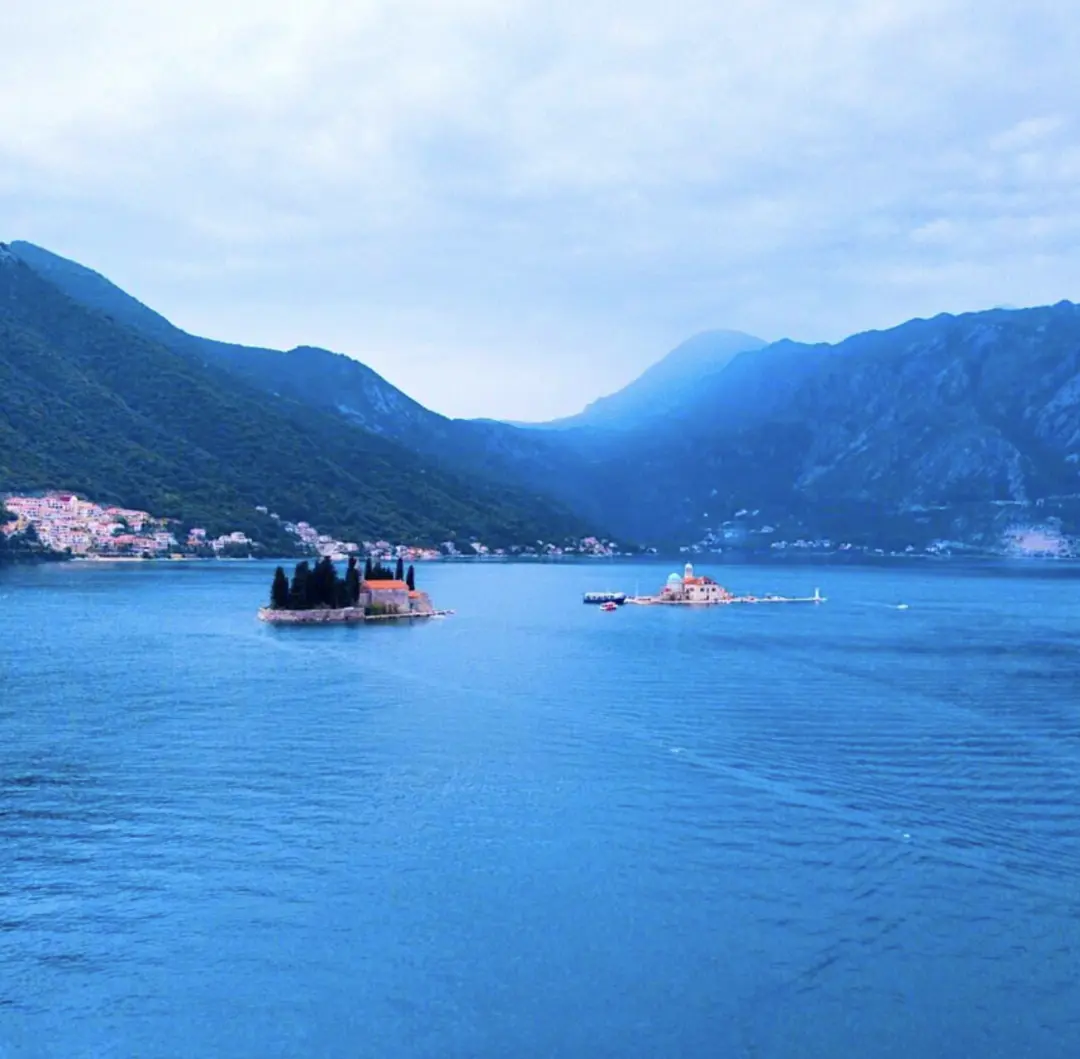
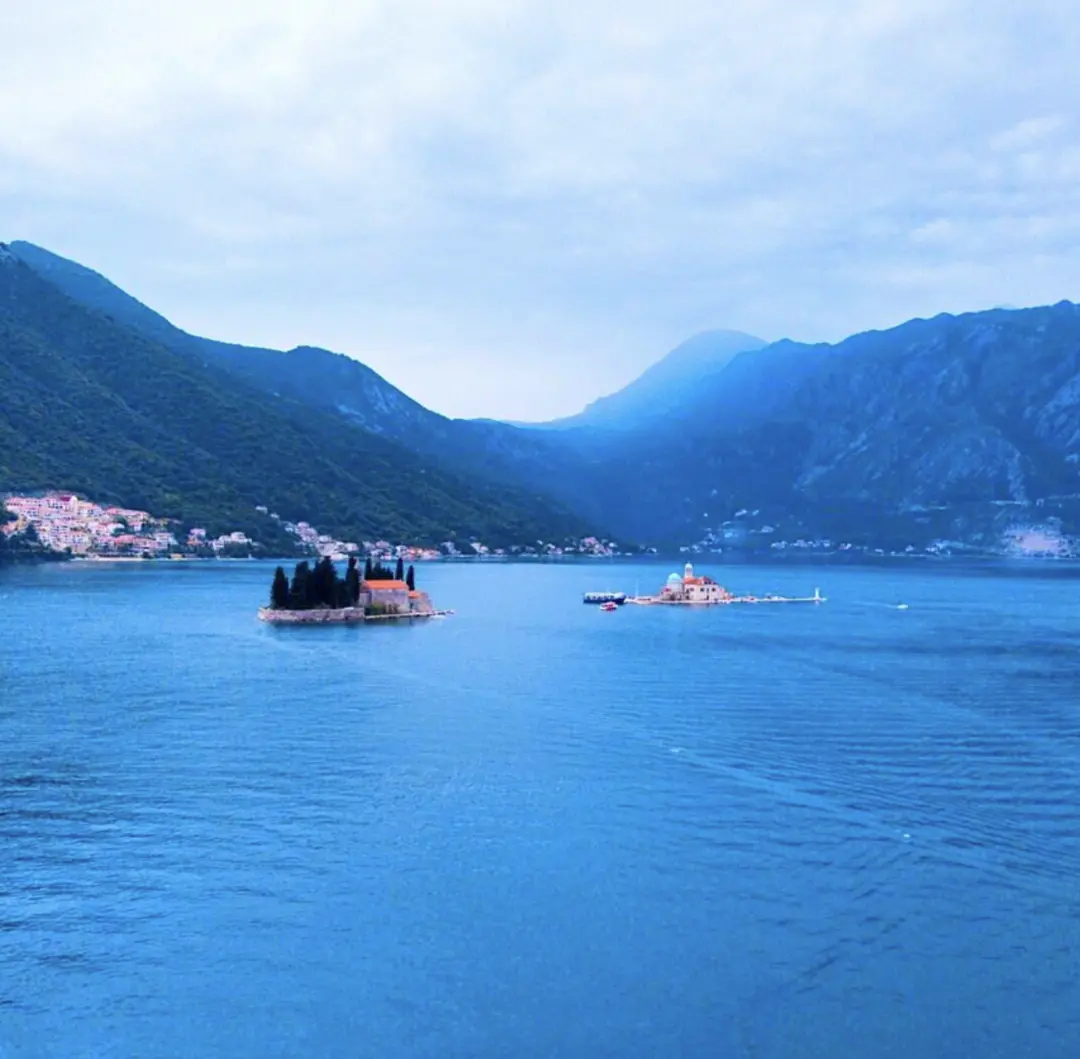
The small town of Perast, located about 10 kilometers from Kotor, can be considered a pearl in the Bay of Kotor. The two tiny islands not far from the coast attract the attention of travelers.
Montenegrins describe it this way: there are two islands, so small that they are like two basketball courts, but interestingly, they are almost parallel to the sea level, resembling two chess pieces placed on the surface of the sea by God.
One of them, Our Lady of the Rocks Island, is an artificial island formed by piling stones and shipwreck debris. Legend has it that fishermen who safely return from the sea would throw a stone into a specific spot in the sea as a vow to the Virgin Mary, and over time, the island miraculously rose. The rock church on the island has become a must-visit pilgrimage site; the other smaller island, St George Island, is now a private island. (This article is reproduced from the internet; if there is any infringement, please contact for removal.)