





As the saying goes, "Health is the capital of revolution," and physical well-being is the foundation of a person's endeavors. Good health requires a robust medical support system. When it comes to healthcare, Malta must be mentioned.
In the World Health Organization (WHO) rankings of global healthcare systems, Malta ranks fifth, surpassing many major countries.
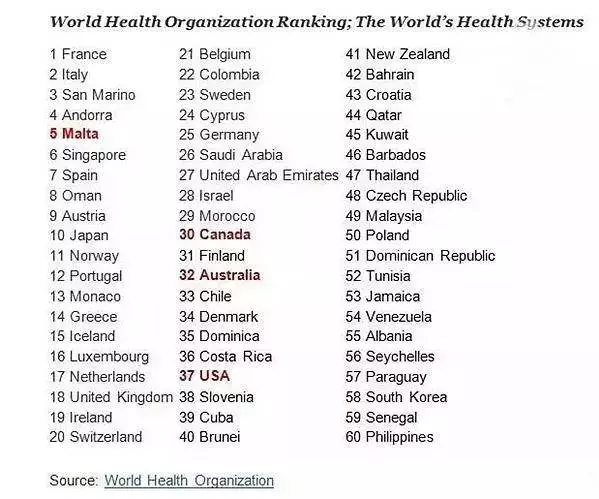
According to WHO statistics, in 2012, Malta's total national health expenditure accounted for 8.7% of its GDP. Calculated by purchasing power parity, the per capita health expenditure was $2,444. Between 2006 and 2013, for every 10,000 people, there were approximately 35 doctors, 71 nursing and midwifery personnel, 5 dentists, 12 pharmacists, and 48 hospital beds.
The earliest medical service provider in Malta dates back to 1372. The advanced medical techniques of the Order of St. John from the 16th century have been passed down through history, resulting in a system characterized by broad coverage and a multi-tiered structure. There is a public healthcare system provided by the government, as well as a private healthcare system funded by private investment.
Malta possesses a strong team of general practitioners who provide primary healthcare services to its citizens. Public hospitals mainly provide secondary and tertiary medical care to patients referred by family doctors. In addition, Malta has numerous medical volunteer organizations, such as the Alpha Medical Society (advanced nursing), the Emergency Fire and Rescue Unit (EFRU), the St. John Rescue Corps, and the Red Cross, which provide first aid and nursing services to Maltese residents.
Mater Dei Hospital, Malta's largest public hospital, is also one of the largest medical facilities in Europe. It began operations in 2007, covers a construction area of 250,000 square meters, and had a total investment of 580 million euros. The hospital features 825 beds and over 3,000 staff members. With its advanced design concept, comprehensive functions, and top-tier facilities, it is one of the largest and most modern general hospitals in the Mediterranean region of the EU. In 2008, a Traditional Chinese Medicine (TCM) clinic was established at Mater Dei Hospital, with a formal unveiling ceremony held on-site.
Malta's renowned oncology hospital, Sir Paul Boffa Hospital, and the world-famous geriatric care hospital, St. Vincent de Paul, are internationally acclaimed.
Similar to the United Kingdom, Malta implements a free public healthcare system. Residents pay a medical insurance premium of approximately 200 euros per year to enjoy the vast majority of medical services for free at major public hospitals. Malta not only offers such favorable medical policies but also effectively avoids issues like difficulty and high costs in accessing healthcare while ensuring high medical quality. The ratio of doctors in Malta is very high; as long as you make an appointment in advance, there is no need to worry about long wait times or failing to see a doctor.
If you need a reason to immigrate to Malta, is the healthcare system enough for you? Through the Malta Residence and Visa Programme (MRVP), you can immigrate to Malta with an investment starting from 70,000 euros. This allows four generations of your family to obtain Maltese permanent residency visas and enjoy the healthy life provided by the high-end medical standards of this romantic island nation.

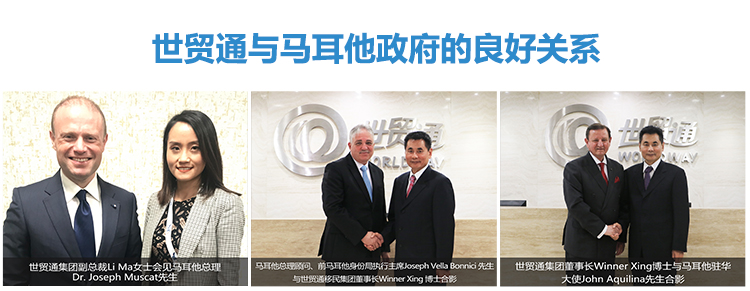
Choose WorldWay for your Maltese immigration process and make your journey easier! As a leader in investment immigration and a pioneer in European investment immigration, the WorldWay Group has been unremittingly promoting high-quality European investment immigration projects for 21 years. We continuously set industry precedents and maintain excellent relationships with the governments of Malta and other European countries, providing a solid backup for your pre-immigration consultation, application submission, and post-immigration settlement!
For more details, please contact: 400-138-2929.