





The "Christmas gift" that President Trump promised to the American people has finally been delivered today!
On the 20th (local time), the U.S. Senate passed the "most aggressive tax cut bill in U.S. history" with a 51-48 vote, and the House of Representatives followed with a 224-201 vote. Now, only President Trump's signature is needed for it to become law.
Following the passage of the tax reform bill, President Trump issued a statement calling this historic legislation an extraordinary victory for American families, workers, and businesses. He stated that the unemployment rate will continue to fall, the stock market will reach new historical highs, and workers' wages will soon rise. Through tax cuts, the U.S. economy will be injected with powerful momentum.
So, according to the Republican Party's final version of the tax reform plan, which taxes are actually being cut? The following is the difference between the Republican final tax reform bill and the current tax system.
What has changed in the tax reform?
What is the impact of the tax reform?
1. Corporate Tax
New Tax Law: Reduced from 35% to 21%, effective in 2018. The scale of the tax cut is quite significant for businesses.
Impact: According to estimates by the Tax Policy Center (TPC), the tax reform is expected to boost corporate profits, with the potential to reduce corporate tax liabilities by nearly $2 trillion over the next decade, which is undoubtedly beneficial for large U.S.-listed companies. At the same time, the major corporate tax cuts will also attract most overseas companies to return to the U.S.
2. Individual Income Tax
New Tax Law: Individual income tax will maintain seven tax brackets, but the tax rate for each bracket will be reduced.

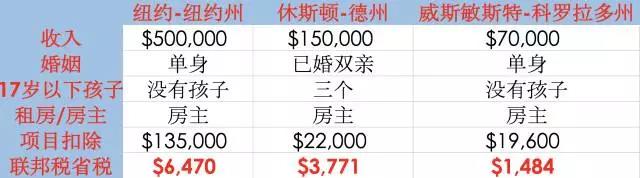
(Overview of tax cuts for typical states and typical families in the U.S.)
Impact: Personal disposable income will increase, which is conducive to personal consumption behavior. Since 67% of U.S. GDP comes from personal consumption, the reduction in individual income tax rates may be reflected in future growth in personal spending.
3. Estate Tax
New Tax Law: The threshold for the estate tax has been increased from the original $5.5 million to $11 million.
Impact: The doubling of the estate tax exemption will intensify the immigration of wealthy, high-net-worth individuals and families from around the world to the United States.
4. Overseas Corporate Profits
This part is directly beneficial to the U.S. dollar. Under the current system, if U.S. companies repatriate overseas profits, they must pay a 35% tax. New tax law: 15.5% for cash portions and 8% for non-cash portions.
This can be compared to the 2004 American Jobs Creation Act, which also encouraged the repatriation of overseas profits through tax cuts. The difference is that in 2004, the rate was reduced to 5.25%. While the magnitude of this round is not as high as the last, after more than a decade of accumulation, the current volume of overseas profits is very large. In the 2004 instance, only $300 billion was repatriated, yet the U.S. dollar appreciated by 15%.
Impact: According to 2015 statistics, U.S. overseas retained earnings have reached $2.5 trillion. Once repatriated due to the lower tax rate, it will increase the demand for the U.S. dollar in the short term, causing the exchange rate to rise. In the medium to long term, these funds will increase investment, create jobs, and promote re-industrialization, thereby driving economic growth, reducing deficits, and allowing the economy to enter a virtuous cycle.
Investment Immigration to the U.S. May Welcome a New Opportunity
The finalization of the largest tax reform in U.S. history means that for businesses and individuals investing in the U.S., tax issues will no longer be a hurdle on the path to immigration, which is undoubtedly full of benefits.
With the arrival of the global CRS tax investigation era and the significant U.S. tax cuts, the United States has gained significant appeal in the minds of many high-net-worth individuals who wish to immigrate. Investment immigration to the U.S. may be entering a new favorable period. As an important means of personal investment, EB-5 investment can not only allocate RMB assets into USD assets but also allow the whole family to obtain a U.S. Green Card, making it an important way for today's high-net-worth individuals to conduct global asset allocation.
For those interested in immigrating to the U.S., choosing an EB-5 project with a $500,000 investment, full principal repayment at the end of the investment period, and one application for the whole family to immigrate is ideal. Currently, the Manhattan No. 9 Luxury Boutique Hotel, for which WorldWay Group serves as the exclusive agent in Greater China, is a high-quality EB-5 project that combines numerous advantages. Once launched, the project was highly sought after by investors, sparking a wave of U.S. investment immigration. Currently, project quotas are tight, and interested investors should seize the opportunity! Hotline: 400-138-2929.