





According to information provided by the Canada Customer Service Center of the WorldWay Immigration Group, there are over 1.3 million vacant or temporarily occupied homes in Canada, based on the latest data from 2016. This is sufficient to provide housing for approximately 3.2 million people.
The number of vacant homes has increased by nearly 40% since 2001.
The population and housing report from the 2016 census released by Statistics Canada shows that the proportion of vacant homes in Canada has increased by nearly 40% since the 2001 census. Nationwide, the percentage of homes without permanent residents rose to 8.7% in 2016, up from 7.6% in 2001.
According to a report by The Huffington Post, Vancouver's upscale neighborhoods "have become a luxury like Ferrari cars," which "most locals cannot afford."

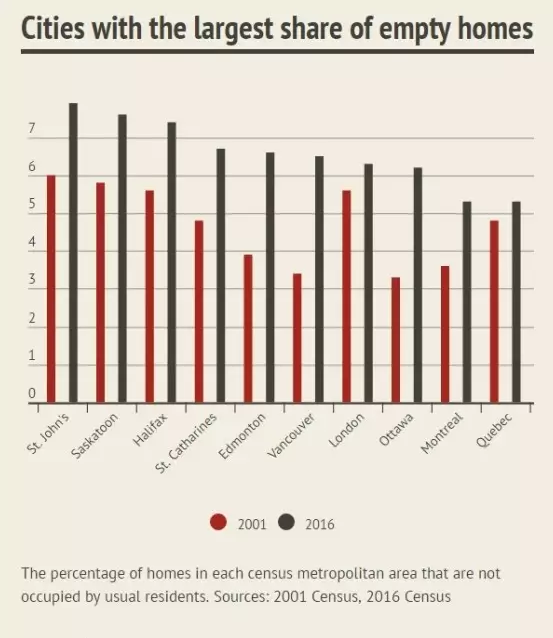
The problem is more severe in smaller cities than in larger cities.
Since 2001, the number of vacant homes in Toronto has doubled to 99,000, providing enough living space for approximately 240,000 people. In Vancouver, the number of vacant homes has also more than doubled to about 66,000.
The rising number of vacant homes has raised concerns among some policymakers in major cities. Many market observers believe that foreign investors and speculators are buying homes without occupying them, which is detrimental to the long-term economic health of communities. Data from housing rental and sales websites indicate that nearly 22% of units in apartments near King Street West in Toronto are vacant.
Last fall, Vancouver became the first city in Canada to impose a vacant home tax: if a home is unoccupied for at least six months each year, Vancouver will levy an additional fee of 1% of the home's assessed value annually.
The issue of vacant homes in Canada is not limited to the unaffordable major cities but is prevalent across various regions. In fact, the vacancy rate in major cities is lower than in small towns and rural communities. Despite the nationwide surge in vacant homes, the vacancy rates in Toronto and Vancouver remain below the national average, with Vancouver at 6.5% and Toronto at 4.4%.
In terms of percentage, the cities with the highest vacancy rates in Canada are places unfamiliar to speculators or foreign investors: St. John's, Saskatoon, Halifax, and St. Catharines in Ontario.
Now is the right time to invest in immigration to Canada.
Canada's beautiful scenery, livable environment, relaxed immigration policies, and high-quality education system attract immigrants from around the world. Many high-net-worth individuals in the country choose to invest in immigration as a means of overseas asset allocation, which not only allows them to obtain overseas identity but also provides better education and development opportunities for their children. Taking advantage of the historically low Canadian dollar, now is the perfect time to invest in immigration to Canada! For more information, please call: 400-138-2929.
Disclaimer: Some materials, data, and charts in this article are sourced from the internet, and the copyright belongs to the original authors. The information or opinions in this article are for reference only. If there are any copyright issues, please contact the original authors and us.