





In the golden month of October, following President Obama's signing of the three-year extension of immigration policies, Worldway Group, as one of the first agencies to promote U.S. investment immigration projects in China, once again brings selected U.S. investment immigration projects to investors. On October 13, a briefing on the Washington D.C. Metropolitan Fire Station Project was held at the Beijing office. Mr. James, a representative of the project's regional center, attended the event in person to support the session. Together with Worldway's senior experts, he provided a comprehensive analysis of U.S. immigration policies and approval processes for the attending investors, and engaged in in-depth discussions regarding the project's background and advantages.
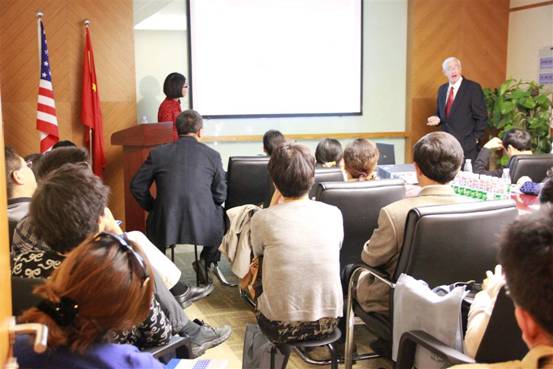
Mr. James, representative of the Washington D.C. Metropolitan Fire Station Project, explains the project to Worldway clients (Photo)
A New Favorite in U.S. Investment Immigration: A Model of Public-Private Partnership
Washington D.C. is the political center of the United States, where the White House, the Capitol, the U.S. Supreme Court, and the vast majority of government agencies are located, and it is administratively under the direct jurisdiction of the federal government. When Washington was established as the capital in 1780, a volunteer fire brigade was formed. In 1864, the city of Washington legislated the formation of the first professional fire department. With the continuous development of the District of Columbia, the Washington Fire Department has expanded from a single fire station to 33 fire stations today, integrating fire fighting and emergency medical services. In particular, during the 9/11 attacks, the fearless spirit displayed by the Washington D.C. firefighters in battling the fire at the Pentagon was highly praised by all sectors across the United States.

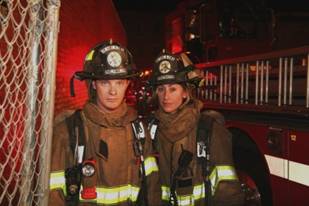
In recent years, in order to improve the working and training environment for firefighters, the District government decided to adopt the highly acclaimed P3 model (Public-Private Partnership) to rebuild and renovate some of the "over-aged" stations originally built in the 1950s. This EB-5 project is a component of this grand plan: to build a new fire station for Engine Co. 13, which is stationed on E Street, where many federal government departments are located. It shoulders the heavy responsibility of protecting the U.S. Capitol building and the White House, and the special fire truck serving the presidential helicopter fleet is stationed here. Every time the President travels, firefighters from Engine Co. 13 must be on-site to stand guard and ensure the safety of the presidential aircraft. Therefore, the fire station building project is funded and strictly supervised by the government. It is also one of the few remaining developable sites in the Washington D.C. federal office area, possessing great commercial development potential. It is a project that the Mayor of Washington D.C. personally visited China to recommend.
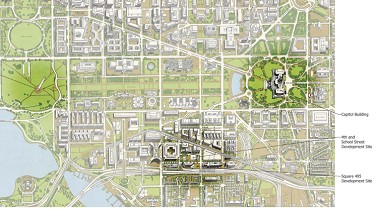
The new site for the Engine Co. 13 fire station will be located at the intersection of 4th Street and E Street, one block away from the current site, south of the I-395 overpass. It is adjacent to numerous federal agencies such as the Department of Transportation, NASA, and the Department of Housing and Urban Development, and is just a stone's throw from the Capitol. The developer and builder of this fire station project are PIP (Potomac Investment Properties) and Clark Construction, respectively. PIP Development LLC has an 80-year history and owns approximately $1.5 billion in assets, including 3,000 residential units totaling nearly 1.6 million square feet and 1 million square feet of office space. Clark Construction is the 9th largest builder in the United States.
Investment Capital Security Guaranteed: EB-5 Investors Hold First-Priority Lien
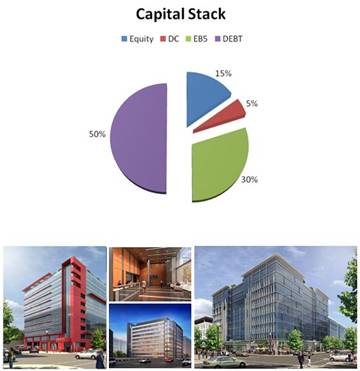
Adopting the Third-Generation Employment Model to Create Indirect and Induced Jobs
Mr. James introduced: According to the latest federal annual data from June 2011, this area was officially designated as a "Targeted Employment Area (TEA)" on November 11, 2011, thus meeting the $500,000 investment immigration standard. The employment analysis report based on RIMS II, approved by the USCIS, points out that this project adopts the rare third-generation employment model, which will generate approximately 2,000 indirect and induced jobs. Most of these are indirect construction jobs, far exceeding the required 1,300 jobs. With an employment surplus rate of over 60%, it is sufficient to meet the needs of 130 EB-5 investors, so investors do not need to worry about the removal of conditions for their temporary green cards.
Experienced EB-5 Regional Center and Legal Team
The Washington D.C. Metropolitan Fire Station Project is issued by the District of Columbia Regional Center (DCRC). DCRC was established in 2008 by David Morris, a well-known immigration attorney in the industry and one of the 10 executive committee members of the American Immigration Lawyers Association (AILA) EB-5 Committee, and has been approved by the USCIS.
Mr. David Morris has nearly 20 years of consulting experience in EB-5 immigration and EB-2 non-immigrant visas. Prior to this project, he successfully obtained the first final approval for an Administrative Appeals Office (AAO) motion to reopen/reconsider in an EB-5 case, which had a huge impact on the industry. Mr. David Morris has a deep understanding of the latest developments in the U.S. investment immigration industry and maintains very in-depth communication with the USCIS. He has a series of articles discussing EB-5 law in depth that are widely cited by the EB-5 industry. As the head of the District of Columbia Regional Center, Attorney David Morris's rich EB-5 experience will lay a solid foundation for investors to obtain permanent green cards.

The Worldway Fire Station Project launch event was packed (Photo)
During the Q&A session after the meeting, guests asked questions and discussed U.S. investment immigration projects, including medical insurance, social welfare, and other related issues. Worldway consultants and Mr. James answered them one by one from multiple perspectives.
After listening to the introduction of the Worldway Fire Station Project, Mr. Zhou felt a sense of "sincerity, reliability, and confidence" during his in-depth communication with Worldway consultants. After conducting in-depth comparisons among several immigration companies, he found that the project introduced by Worldway was more suitable for his own situation. Most of the guests stayed at the venue to conduct one-on-one application condition assessments and processing consultations with Worldway's professional consultants. In order to secure the rare quotas, many investors signed contracts on the spot to subscribe for spots.
