






In recent years, the pace of Chinese capital investing in Europe has accelerated, with Chinese investors appearing in traditional investment destinations such as the United Kingdom, Portugal, and Spain, as well as rapidly growing investment hotspots like Greece and Cyprus, particularly in the area of property investment.
According to data from Colliers International, in 2017, Chinese investment in European property assets surged by 336% to $18.7 billion (approximately 118.4 billion RMB), with nearly half of this amount directed towards European property assets.
So, what compelling reasons make European properties so hard to resist? The editor has summarized the following three points:
1. Undervalued
After experiencing the global financial crisis and the European debt crisis, residential and commercial real estate in major European cities suffered significant blows. Due to the relatively slower and more tumultuous economic recovery in Europe compared to the United States, the current price levels in the European real estate market are "equivalent to those in the United States four to five years ago."
This can be reflected in the Rent-to-Price Ratio of real estate: in major European cities, the Rent-to-Price Ratio for commercial properties can exceed 6%, while in first-tier cities in China, this figure may only be half of that in Europe. The higher the relative selling price, the more it can provide healthy cash flow for the project, which also strongly supports the valuation when the project is sold.
2. High Leverage Ratio
It is well known that in terms of monetary policy, the European Central Bank is still implementing strong stimulus strategies from the post-crisis era, and several European countries have even introduced negative interest rate policies to stimulate consumption.
Benoit Coeure, a member of the European Central Bank (ECB), stated on April 6 that a high degree of monetary easing is still necessary as an internal consensus, which also means that Europe will continue to maintain low interest rate levels.
These policies have directly led to a significant decline in financing costs in the Eurozone, with European real estate projects obtaining leverage funding of 60% to 80% at a cost of about 2%, which is difficult to find in other markets like China, especially against the backdrop of interest rate hikes in the United States and the tightening of residential real estate regulations and soaring mortgage rates in China.
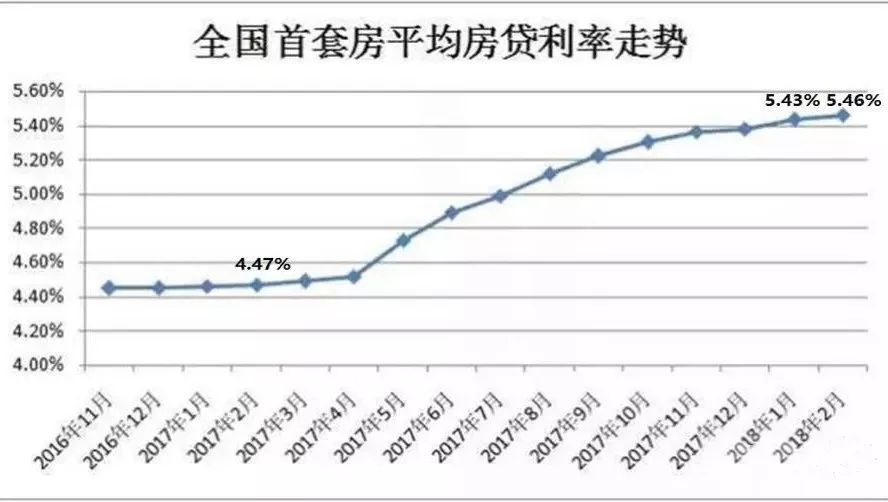
Average Mortgage Rate Trends for First-Time Homebuyers in China
3. Allocation of Euro-denominated Assets
The appreciation and depreciation of currencies is a very complex issue, and even seasoned economists find it difficult to predict accurately. Therefore, diversifying into multiple currency assets is also a very important part of asset allocation.
Although the European Central Bank's easing policies will still be a significant resistance to the appreciation of the Euro, the gradual recovery of economic growth in Europe will drive foreign inflows, which will also provide upward support for the Euro's price.
Additionally, the exchange rates between the Euro, US Dollar, and Renminbi often form a mutually restraining triangular relationship, thus allocating assets denominated in these three currencies will effectively hedge against exchange rate risks.
At WorldWay Immigration Wealth Club, we sincerely aim to enrich your global financial investment perspective and advocate a high-end international quality lifestyle. With twenty years of professional top-level asset allocation experience, we strive to create an international quality elite business exchange circle for you at the pinnacle of the pyramid. Consultation hotline: 400-186-0266
