






Since 2018, the RMB exchange rate against the USD has continuously broken through the integer marks of 6.5, 6.4, and 6.3. In January alone, the actual appreciation of the RMB against the USD reached as high as 2.5%. Although there were fluctuations in February, the momentum of RMB appreciation remains unabated.
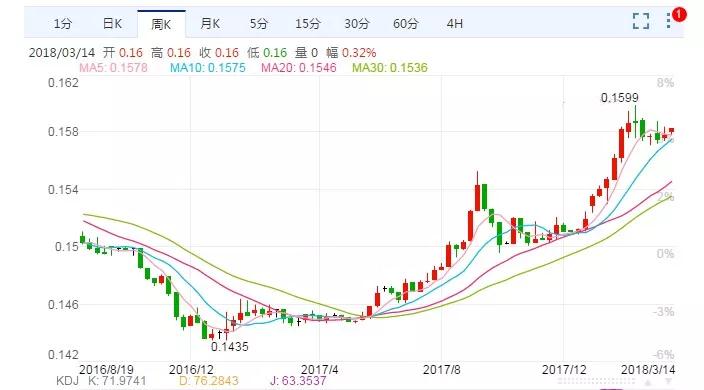
With the continuous appreciation of the RMB exchange rate, there are signs of a recovery in corporate overseas "shopping sprees."
For example: Geely acquired a stake in Germany's Daimler; Fosun acquired the Brazilian institutional brokerage and wealth management firm Guide for 170 million Brazilian Reais (approximately 403 million HKD); HNA and Global Logistic Properties (GLP) signed a strategic cooperation agreement in Sanya, Hainan, to jointly build a modern logistics ecosystem, and so on.
Enterprises have already taken action; so, as ordinary investors, how should we seize the relevant investment opportunities?
Purchasing USD Assets
RMB appreciation implies USD depreciation. This directly means that the costs for overseas travel and shopping will be lower than before. For instance, on December 28, 2017, we needed 661 RMB to exchange for 100 USD at the bank; today, we only need 630 RMB, saving nearly 31 RMB.
Therefore, if you have plans for overseas travel or study in the short term, take advantage of the current strength of the RMB and exchange currency now. It is highly cost-effective, giving one the satisfying feeling of making one yuan go as far as two.
From an investment perspective, rather than exchanging for USD and letting it sit, it is better to directly purchase USD assets and wait for them to appreciate.
For example, you could appropriately purchase some overseas funds, or buying property directly in the United States is most suitable. Keep in mind that for a house worth 1 million USD in the U.S., buying it this year saves at least 400,000 RMB compared to last year.
Foreign Exchange Trading
If you hold foreign currency, you can appropriately reduce your positions in the short term and wait for the USD or Euro to stabilize before exchanging at a lower price. This will allow you to exchange for more foreign currency at a lower cost.
The reason some people take risks to exchange or trade foreign currency is mainly the hope that their assets can maintain their value over time.
However, while you may see the current absolute advantage of the RMB against the USD and want to make a profit through currency exchange, do not forget that the government's control over foreign exchange remains very strict. Both underground banks and "ant-moving" style currency exchanges will face severe crackdowns. Therefore, those with such ideas must be extra careful not to cross the policy red line. In short, unless absolutely necessary, do not engage in unnecessary speculation.
Stock Trading
Against the backdrop of significant RMB appreciation, most fund managers are optimistic about the reversal opportunities in the aviation and tourism sectors.
A fund manager in Shanghai stated that for A-share listed companies, the RMB appreciation concept stocks most recognized by the market are in the aviation and paper-making sectors.
Since airlines' aircraft leasing and overseas procurement are denominated in USD, if the RMB appreciates against the USD, the company's costs will decrease and its income will increase accordingly. The paper-making industry's main raw materials are imported; according to estimates, a 2% appreciation of the RMB can reduce costs in the paper-making industry by 0.51%, increase the gross profit margin by 3.01%, and increase total profits by as much as 8.79%.
