Benjamin Franklin once famously said, "In this world, nothing can be said to be certain, except death and taxes."
For those who already hold a Cyprus EU passport or are considering investment immigration to Cyprus, it is essential to understand the local tax system. Today, we will analyze the personal income tax within the Cyprus tax system.
Cyprus Tax Residents
If an individual resides in Cyprus for a cumulative period of more than 183 days within a calendar year, they are considered a tax resident of Cyprus.
In addition to the aforementioned criteria, on July 14, 2017, the Parliament of Cyprus passed a new regulation whereby an individual is also considered a tax resident of Cyprus if they meet the following conditions:
· Do not spend more than 183 days in any other country within a tax year;
· Spend at least 60 days in Cyprus within a tax year; and are not a tax resident of any other country;
· Conduct business in Cyprus, are employed by a Cyprus company, or hold a position in an entity that is a tax resident of Cyprus at any time during the tax year;
· Maintain a permanent residence in Cyprus, whether owned or rented.
Personal Income Tax
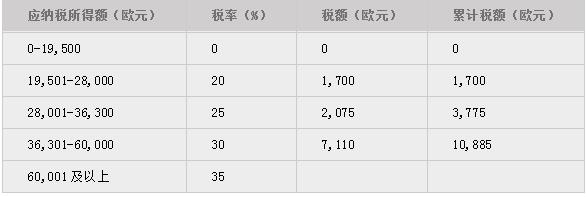
For tax residents of Cyprus, income generated both within and outside of Cyprus is subject to taxation. For non-tax residents, only income derived from within Cyprus is subject to taxation. The following income tax rates apply to individuals:
Income Tax Exemptions
· Interest income under certain conditions;
· Dividend income;
· Remuneration for work performed outside Cyprus for more than 90 days in a tax year for a non-resident employer, or for a foreign permanent establishment of a resident employer;
· Pensions, retirement income, and compensation for death or personal injury;
· Any form of approved fund (e.g., provident fund) is exempt from income tax;
· Profits from the trading of securities.
Cyprus Tax Benefits
· Expatriates relocating to Cyprus who are employed by a Cyprus company with an annual salary exceeding 100,000 euros may enjoy a 50% income tax exemption (applicable for 10 years starting from the year of employment). Expatriates who do not qualify for the 50% exemption may be eligible for a 20% income tax exemption (this policy was applicable until 2020).
· For non-domiciled expatriates relocating to Cyprus for the first time, dividend and interest income are fully exempt from taxation, a benefit that remains applicable for the following 16 years.
· Exemption from capital gains tax on assets other than immovable property in Cyprus;
· 50% reduction in property transfer fees; if VAT is applied, no property transfer fee is charged;
· Abolition of immovable property tax (abolished as of 01/01/2017);
· Low progressive income tax rates, with the first 19,500 euros of income tax-free;
· No wealth tax;
· No inheritance tax;
· No gift tax.
Taxation has undoubtedly become a significant burden for high-net-worth individuals. A better tax environment is like fertile soil that can nurture greater wealth. While tax systems of countries around the world are generally public, what investors often lack are effective channels to access environments best suited to their needs.
At present, investment immigration to Cyprus is very straightforward. Investors only need to invest 2 million euros in real estate to apply for Cyprus immigration in one step, obtain EU citizenship for their whole family, and hold a Cyprus passport to facilitate broader overseas asset allocation while enjoying local tax benefits. Of course, taxation is just one aspect of the benefits of Cyprus. For more information, please call 400-138-2929 for detailed inquiries.