



Recent rumors suggest that the California School Boards Association (CSBA) may abolish school district rankings and modify the school district evaluation system. Once the news broke, it came as a heavy blow to U.S. immigrants who have already purchased school district housing.
How are school district rankings evaluated?
Which mysterious organization is evaluating California's school district rankings? The existing school district evaluation system was implemented in 1999 and is officially called the Academic Performance Index (API).
The API is also known as the California Public Schools Academic Performance Index. The California government uses API scores every year to measure the performance of primary and secondary schools across the state. It evaluates schools based on students' scores in English, mathematics, science, and social studies on the California Standards Tests (CST). High school API also considers the results of the California High School Exit Examination. API scores range from 200 to 1,000, and the current minimum target for California is 800.
At the same time, other factors are also considered, such as the school's SAT scores, historical background, parents' education levels, whether the school district has specialized educational subjects, the activity level of the school's Parent-Teacher Association, and the sense of pride among students and parents.
If school district rankings are truly abolished or changed, it will have a significant impact on housing prices, teaching quality, and the racial composition of schools.
Will school district housing prices plummet?
In the API's assessment of schools, schools with academic performance in the top 10% have a performance index of 10, while those in the bottom 10% have an index of 1. This is the origin of why we hear that some schools are rated 10 and others are rated 8.
Once the existing school district rankings are abolished or the current evaluation system is changed, the market for school district housing will cool down, naturally causing a sharp drop in local housing prices.
Will teaching quality decline?
In the United States, there is a saying called "funding school districts through taxes." Public primary and secondary education in the U.S. is completely free. However, everything from basic school infrastructure and teaching equipment to faculty and school bus services requires significant funding. The federal government only provides about 10% of total expenditures, the state government covers about 50%, and the remaining funds are raised by local governments and school districts.
Both state and local government education expenditures rely heavily on property taxes. This means that the owner of a property must pay property taxes to the state and local governments at various levels based on the assessed value of the property. The higher the property value, the higher the property tax that must be paid. Therefore, the quality of education in school district schools is actually paid for directly by the families living within that district.
If the housing prices in a certain school district drop sharply, it will directly lead to a reduction in property tax revenue in that area, which in turn will cause the education funding for schools in that district to shrink, making the overall quality of education less than optimistic.
Will private schools become more popular?
Typically, U.S. school district housing refers to public schools that accept students based on the principle of proximity. Private schools are established by religious organizations and individuals, charge higher fees, and the school attended is not related to the area of residence. Most Chinese people want to buy school district housing to send their children directly to the corresponding public schools through the school district zone. If school district housing is re-ranked, more parents may be inclined to change their educational investment direction and send their children to private schools.
How to check school districts by yourself?
We recommend a query website—Great Schools. You can check school district rankings by directly entering the city, zip code, address, or school name.
Planning for children's education, moving into top U.S. school district housing, and attending top U.S. schools are the main attractions for Chinese people choosing to immigrate to the U.S. and obtain green cards for their entire family.
Worldway Jiuding Brooklyn Heights Apartment EB-5 Project is Popular
Currently, the Jiuding Brooklyn Heights Apartment EB-5 project, exclusively represented by Worldway, is a large-unit rental apartment located in the most sought-after affluent area of Brooklyn Heights, home to top-tier schools across the United States, and represents a scarce rental resource with a Manhattan concept.
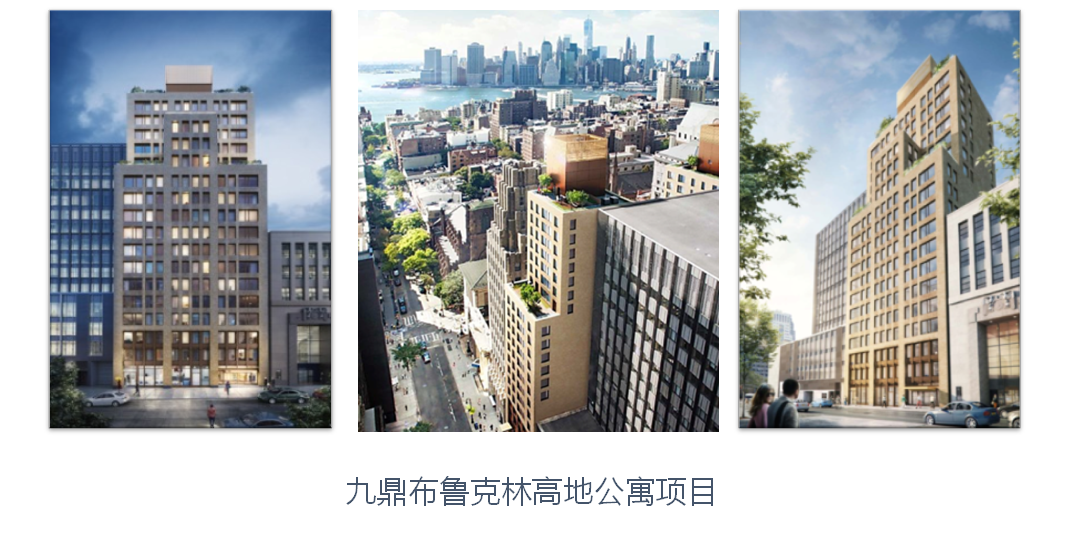
The project has convenient transportation and an excellent location, adjacent to Manhattan and Wall Street. The environment is elegant and is known for its historical and cultural landscapes and excellent school districts, attracting many middle-class and wealthy individuals to settle here.
In the Jiuding Brooklyn Heights Apartment project, the Jiuding International Phase II Real Estate Fund is the major shareholder. This is the first time EB-5 investors have had the opportunity to invest alongside two giants, the Jiuding International Phase II Real Estate Fund and the Teachers Insurance and Annuity Association of America (TIAA), in a high-quality project to obtain green cards for the whole family.
In addition, the project has a stable capital structure. The construction jobs alone have already met the requirements of the U.S. Citizenship and Immigration Services (USCIS). The EB-5 capital ratio is low, and the exit mechanism is simple. More importantly, Jiuding uses years of private equity fund management experience to manage the EB-5 project and funds in a standardized manner. Furthermore, the Jiuding International Phase II Real Estate Fund uses its own capital to provide a refund guarantee for investors. If an investor's I-526 or I-485 application fails, or if the visa interview is rejected, the project investment and issuance fees will be fully refunded.
For U.S. immigration or more project details, please call: 400-138-2929.